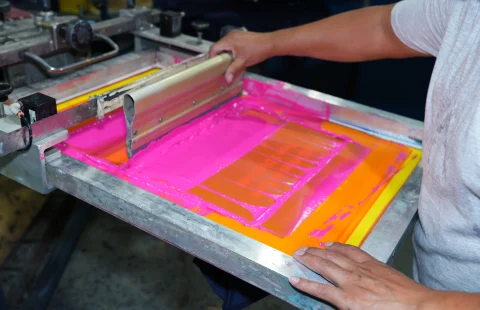

Screen Printing Machine Prices: A Comprehensive Guide to Choosing the Right Machine in 2026
Part 1: Why do screen printing machine prices vary? (Technical details that determine the actual cost)
Screen printing machine prices Most people make the same mistake when researching: "I'll buy the cheapest one, then I'll grow." However, screen printing is not just about buying a machine; print quality, production speed, waste rate, labor cost, need for reprints, and delivery time to the customer. It is a production system that needs to be evaluated along with dozens of parameters. Therefore, the price should not be considered as a single number, but as a "return on investment (ROI)". In 2025, the market will have a wide range of products, from manual, vacuum manual, semi-automatic, circular printing machines, multi-station machines, and industrial lines. Even between two products sold under the same "screen printing machine" label, the reason for the price difference is often due to technical details that are not immediately apparent.
The first and most critical element vacuum systemThe vacuum printing plate secures the material to be printed on (T-shirt, cloth bag, cardboard, PVC, plastic sheet, etc.) to the plate. This securing prevents even millimeter-scale movement of the product during printing. Missing print, shadow (double image), register escape, color overlapping It significantly reduces problems like these. The vacuum machine, which "seems expensive," is actually cheaper to operate in the long run because it reduces production errors and waste. Therefore... screen printing machine prices Within the best price-performance range, the manual vacuum cleaner class is found in most workshops. And the product you want to highlight fits perfectly into this category:
Priority product: https://www.okangokhan.com/urun/serigrafi-vakumlu-manuel-baski-makinesi/
The second factor affecting the price mechanical stability and body qualityIn screen printing, the "printing arm" and "squeegee printing" must be repeatable. If the body flexes, the hinge system creates play, or the build plate plane is distorted, the result will be wavy, no matter how well you prepare the plate. This waviness, especially... Detailed designs, fine lines, halftones, multi-colored work. And in demanding jobs like corporate work (logo printing), it directly affects customer satisfaction. A quality print head means not only durability but also a high print standard. This standard comes at a price.
The third element printing area and table dimensionsSmaller table machines may seem more budget-friendly; however, as the business grows, the need for a "larger printing area" arises. As the printing area increases, both the plate dimensions (frame/plate) and the workflow change. For example, for manufacturers requiring larger sizes, investment in metal/aluminum frames on the plate side becomes relevant.
- 40x60 metal mold: https://www.okangokhan.com/urun/3×3-cerceve-40×60-metal-kalip/
- 50x70 metal mold: https://www.okangokhan.com/urun/3×3-cerceve-50×70-metal-kalip/
- 40×60 aluminum mold: https://www.okangokhan.com/urun/4×4-cerceve-40×60-aluminyum-kalip/
- 50x70 aluminum mold: https://www.okangokhan.com/urun/4×4-cerceve-50×70-aluminyum-kalip/
The fourth element workflow and supporting equipmentThe screen printing machine alone does the "printing"; however, for the business to become commercially viable, the ink needs to dry/fix and the production needs to flow. Therefore, the "hidden cost" that most workshops don't realize when evaluating prices is this: even if the machine is cheap, if the drying and fixing aspects are inadequate, production will stall. If two products need to be delivered on the same day, drying rack or conveyor dryer If the right choices aren't made, the job won't be completed on time. Therefore, it's necessary to consider the screen printing ecosystem as a whole.
- Conveyor dryer / fixing tunnel: https://www.okangokhan.com/urun/konveyor-kurutucu-fikse-tuneli/
- Screen printing paint drying rack (Rayk): https://www.okangokhan.com/urun/serigrafi-boya-kurutma-rafi-rayk/
- 50x70 drying rack: https://www.okangokhan.com/urun/serigrafi-boya-kurutma-rafi-50×70/
- 40x60 drying rack: https://www.okangokhan.com/urun/serigrafi-boya-kurutma-rafi-40×60/
The fifth element Usage scenario (monochromatic or multi-colored?). While manual machines and vacuum manual systems work very well for single-color jobs (e.g., single logo, single text), "register" accuracy and the number of stations become crucial in multi-color production. Machine selection is critical for speed and repeatability in multi-color production.
- 4-color, 1-station printing press: https://www.okangokhan.com/urun/serigrafi-baski-tezgahi-4-renk-1-istasyon/
- T-shirt printing machine: https://www.okangokhan.com/urun/tisort-baski-tezgahi/
The sixth element consumables and processKey factors include: the right squeegee, the right ink/dye, retarder, mesh selection, film output, exposure settings… all determine print quality and speed. Therefore, when we talk about "machine price," we are actually talking about a "screen printing production system." Examples from the product side:
- Screen printing paint: https://www.okangokhan.com/urun/serigrafi-boya/
- Screen printing retardant: https://www.okangokhan.com/urun/serigrafi-geciktirici/
- Screen printing squeegee: https://www.okangokhan.com/urun/serigrafi-ragle/
- Screen printing squeegee rubber: https://www.okangokhan.com/urun/serigrafi-ragle-lastigi/
On the blog side, there are internal links that explain this technical process and increase the authority of the article (we also reference them in this article):
- What is a screen printing machine (2025): https://www.okangokhan.com/serigrafi-baski-makinasi-nedir-2025/
- What is screen printing (guide): https://www.okangokhan.com/serigrafi-nedir-2025-rehberi/
- Screen printing mesh / silk selection: https://www.okangokhan.com/serigrafi-mesh-ipek-secimi/
- Screen printing film output: https://www.okangokhan.com/serigrafi-film-cikisi/
- Screen printing plate exposure settings: https://www.okangokhan.com/serigrafi-kalip-pozlama-ayarlari/
- Screen printing errors: https://www.okangokhan.com/serigrafi-baski-hatalari/
External sources:
- https://www.metmuseum.org/perspectives/materials-and-techniques-printmaking-screenprint
- https://en.wikipedia.org/wiki/Screen_printing
- https://www.ynvisible.com/news-inspiration/what-is-screen-printing
- https://www.printful.com/blog/what-is-screen-printing
The summary of this section is as follows: screen printing machine prices, Price isn't just about "the number on the label." Vacuum, body quality, print area, production scale, multi-color capacity, drying and fixing infrastructure, and the consumables ecosystem all determine the price and, more importantly, profitability. In the second part, I will break this logic down into segments and clarify the question of "which machine makes sense for which goal?".
Part 2: How to read screen printing machine price ranges in 2026? (Manual, vacuum manual, semi-automatic, and circular printing logic)
“Someone searching for "screen printing machine prices 2025" usually has two goals in mind: either they are setting up a workshop from scratch or they want to expand their existing production. Therefore, when discussing price ranges, it's more important to focus on specific numbers rather than just giving specific figures., the logic of segments It would be more accurate to explain. Because a machine isn't bought simply because it's "cheap,", suitable for the job Therefore, it is the right choice. The most common segments in 2025 are: non-vacuum manual, vacuum manual, semi-automatic (flat), semi-automatic circular, multi-station printing presses and industrial lines.
1) Manual segment without vacuum It's usually the first place people look when they say, "Let me start." The advantage here seems to be the low investment; the disadvantage is that the "printing standard" often doesn't settle quickly. Problems like fabric movement on the t-shirt, slippage on the cardboard, and misalignment after printing reduce motivation, especially for beginners. This increases the real cost: more trials, more waste, more time lost. Therefore, the vacuum-free manual segment might only make sense for very simple jobs or very low-volume hobby productions. Since your business goal is sales and growth, that's not the main focus.
2) Vacuum manual segment In 2026, this is the "smartest investment" segment on the market. Because it provides printing stability thanks to vacuum technology while maintaining the flexibility of manual control. When you buy a good machine in this segment, you get the following:
- The print "settles" and becomes repeatable.
- Registering becomes easier (especially in multi-color jobs).
- Waste decreases, and the standard of products reaching the customer improves.
- Operator training becomes easier (those starting out see results faster).
You are already prioritizing the clearest example of this segment:
Vacuum Manual Screen Printing Machine (Priority Product):
https://www.okangokhan.com/urun/serigrafi-vakumlu-manuel-baski-makinesi/
The reason we're highlighting this product in our "screen printing machine prices" article is this: When people search for prices, they're actually solving a problem: "What will I gain from paying this much?" A vacuum manual machine is a solution that directly shows the profit. Especially... t-shirt printing, It is a very powerful core piece of equipment for fabric bags, promotional printing, cardboard packaging, and small-to-medium workshop businesses.
3) Semi-automatic segment This is where those looking to scale up production look. Semi-automatic machines generally stand out with their printing pressure and repeatability of movement; this brings speed and standardization to high-volume jobs. However, the critical question here is: "How many units do you produce monthly, and how many different jobs do you take on?" If the job variety is high and the volumes are low to medium, the return on investment for semi-automatic machines may take longer. If the volumes are high and you are printing the same job continuously, semi-automatic machines become logical. Examples of this segment are included in the product pages:
- Semi-automatic screen printing machine: https://www.okangokhan.com/urun/yari-otomatik-serigrafi-baski-makinesi/
- Semi-automatic circular printing machine: https://www.okangokhan.com/urun/yari-otomatik-yuvarlak-baski-makinesi/
- Semi-automatic circular printing machine (blog): https://www.okangokhan.com/yari-otomatik-yuvarlak-baski-makinasi/
- Selecting a screen printing machine: https://www.okangokhan.com/serigrafi-baski-makinasi-secimi/
4) Circular printing segment (Cups, bottles, cylindrical products) are a separate area of expertise. Here, the price is determined not only by automation but also by the equipment, templating, product fixing, and perimeter printing precision. Those looking to buy a circular printing machine usually come with a specific customer portfolio in mind: “seeking cup printing work,” “entering the promotional market,” “cosmetic packaging printing,” etc. In this segment, process management and equipment determine the price as much as the product itself.
5) Multi-color counter/station system This is what most t-shirt printers look at during the "growing up the business" phase. The main factors affecting the price here are the number of stations, arm stability, microregister settings, and workflow. Your product line has a strong example on this side:
- 4-color, 1-station printing press: https://www.okangokhan.com/urun/serigrafi-baski-tezgahi-4-renk-1-istasyon/
- T-shirt printing machine: https://www.okangokhan.com/urun/tisort-baski-tezgahi/
On top of all these segments, you also need to add a "complementary system": drying And fix. Those comparing screen printing machine prices often forget this: if the ink isn't dried properly after printing, the product will be returned or there will be problems during washing. Therefore, the "result" in production depends on drying/fixing. There are two strong lines in this area:
- Conveyor dryer / fixing tunnel: https://www.okangokhan.com/urun/konveyor-kurutucu-fikse-tuneli/
- Paint drying rack (Rayk): https://www.okangokhan.com/urun/serigrafi-boya-kurutma-rafi-rayk/
And here are the blog's internal links supporting these:
- What is a fixation tunnel? https://www.okangokhan.com/fikse-tuneli-nedir-2025/
- What is a conveyor dryer? https://www.okangokhan.com/konveyor-kurutucu-nedir-2025/
- What is a paint drying rack? https://www.okangokhan.com/boya-kurutma-rafi-nedir-2025/
Let's clarify this in this section: Screen printing machine prices, This is essentially the answer to the question, "In which segment and with what production goal are you progressing?" If the aim is to quickly achieve professional quality and bring the business to a marketable standard, then the manual vacuum segment is the healthiest entry or growth investment for most businesses. Now, in the final section, I will focus on your primary product and frame the question "Why is the price of a manual vacuum machine worth it?" in terms of profitability and sales.
Chapter 3: Why is a manual vacuum cleaner the most sensible investment? (Price-performance, profitability, selling arguments, and the right package design)
This is the most critical part of the article on screen printing machine prices: People seem to want to know the price; but deep down they think, "I don't want to buy the wrong machine and waste my money." Therefore, in the final section, we'll explain the reasons behind the price. profitability And operation (production) You need to clarify your position. The product you want to promote conveys this message very accurately:
Vacuum Manual Screen Printing Machine: https://www.okangokhan.com/urun/serigrafi-vakumlu-manuel-baski-makinesi/
There are three main reasons why this machine stands out under the "price" category: print quality, labor productivity, reduce waste. In screen printing, what makes money isn't "making a print"; it's "making the same print". repeatedly with the same quality The key is to be able to do this. Vacuum enhances this repeatability. Because the product remains stable on the print bed, the movement of the fabric or material during printing is greatly reduced. This means that when printing 50 copies of the same design, the difference between the first and 50th prints is minimized. In the customer's eyes, this means "professional work.".
The greatest advantage of a manual vacuum printing machine is seen especially in t-shirt printing. Due to the nature of the fabric, t-shirts stretch, slide, and create "small waves" on the surface. In non-vacuum systems, this affects print quality. A vacuum table, however, holds the fabric more stably. As a result, the print is clearer, the lines appear cleaner, and the ink distribution is more even. This increase in quality is the first factor that justifies the price.
The second layer, speed and operator performanceWhen we say "manual machine," people might think "slow." However, with the right system, manual machines can be very fast. This is because the time-consuming part in a manual machine isn't pulling the lever; it's the product slipping, readjusting, correcting the print, setting aside faulty products, and reprinting. A vacuum manual machine reduces these repetitions, thus increasing the actual production speed. Increased production speed reduces the labor cost per unit, which accelerates the return on investment for the machine.
The third layer, job diversityManual vacuum systems are very versatile: they can be used on surfaces such as t-shirts, tote bags, cardboard, PVC, and more. This versatility expands the workshop's customer portfolio. In other words, you can take on more different jobs with the same machine. This is a very strong argument on the sales side: "Serving different sectors with a single machine." This is supported by blog content:
- Establishing a screen printing workshop (2025): https://www.okangokhan.com/serigrafi-atolyesi-kurmak-2025-rehberi/
- Screen printing materials (professional guide): https://www.okangokhan.com/serigrafi-malzemeleri-profesyonel-baski-rehberi/
There's also an important sales strategy here: "Machine + the right complementary product package." Because people who come to the screen printing machine price page are often not looking for just one product, complete solution Yes. Your product range is very well-suited to naturally building this package. Example package structure:
screen printing machine prices
screen printing machine prices
screen printing machine prices
screen printing machine prices
A) Beginner and professional entry package (vacuum manual center)
- Vacuum manual printing machine: https://www.okangokhan.com/urun/serigrafi-vakumlu-manuel-baski-makinesi/
- Screen printing paint: https://www.okangokhan.com/urun/serigrafi-boya/
- Screen printing squeegee: https://www.okangokhan.com/urun/serigrafi-ragle/
- Ragle rubber: https://www.okangokhan.com/urun/serigrafi-ragle-lastigi/
- Paint drying rack (Rayk): https://www.okangokhan.com/urun/serigrafi-boya-kurutma-rafi-rayk/
The logic behind this package is: first standardize the print, then solve the drying problem, then improve the quality.
B) Workshop package that increases production (larger printing area / higher capacity)
- 70x200 vacuum manual: https://www.okangokhan.com/urun/70×200-serigrafi-vakumlu-manuel-baski-makinesi/
- 100x200 vacuum manual: https://www.okangokhan.com/urun/100×200-serigrafi-vakumlu-manuel-baski-makinesi/
- 80×250 non-vacuum manual (larger size alternative): https://www.okangokhan.com/urun/80×250-vakumsuz-manuel-baski-makinesi/
- Conveyor dryer / fixing tunnel: https://www.okangokhan.com/urun/konveyor-kurutucu-fikse-tuneli/
- 50x70 drying rack: https://www.okangokhan.com/urun/serigrafi-boya-kurutma-rafi-50×70/
The logic behind this package is: increase the printing area, boost production volume, and guarantee delivery quality through fixation.
C) Multi-color and t-shirt focused production package (workshop + process)
- 4-color, 1-station printing press: https://www.okangokhan.com/urun/serigrafi-baski-tezgahi-4-renk-1-istasyon/
- T-shirt printing machine: https://www.okangokhan.com/urun/tisort-baski-tezgahi/
- Desktop printing device: https://www.okangokhan.com/urun/serigrafi-masaustu-baski-aparati/
- Foot-operated printing press: https://www.okangokhan.com/urun/serigrafi-ayakli-baski-aparati/
- Drying rack 40×60: https://www.okangokhan.com/urun/serigrafi-boya-kurutma-rafi-40×60/
The logic behind this package is: Prepare for multifaceted tasks, register, and strengthen your workflow.
Now let's get to the critical point that strengthens the "price page" in SEO: semantic scope. Google is no longer just looking at the term "screen printing machine prices"; it's also checking if the page includes these concepts: screen printing press, vacuum printing machine, manual screen printing, semi-automatic screen printing machine, fixation tunnel, conveyor dryer, drying rack, mesh selection, exposure, movie release, printing errors, color consistency. Therefore, I've balanced both product links and technical blog links in this article. It's also essential to answer classic questions users ask when searching for "price": "Which machine is best for beginners?", "Which one is best for t-shirts?", "Is a dryer necessary?", "When is a semi-automatic machine sensible?", etc. I will clarify these in the FAQ section.
One advantage of external (authority) links is that users stay on the page longer, and the topic is perceived as "basic information + practical solution." Therefore, we used/recommended these four external links in the article, and I'm clearly stating them again below:
- https://www.metmuseum.org/perspectives/materials-and-techniques-printmaking-screenprint
- https://en.wikipedia.org/wiki/Screen_printing
- https://www.ynvisible.com/news-inspiration/what-is-screen-printing
- https://www.printful.com/blog/what-is-screen-printing
Conclusion: The main goal on the 2025 screen printing machine price page is not to "state a single price"; it's to help the user choose the right segment. purchase decision The goal is to clarify. Your primary product (manual vacuum printer) is the strongest carrier of this goal. Because it doesn't alienate entry-level users, and it sends the message to manufacturers demanding professional quality that "this is the standard in this field." When you feed this article with the right internal link network, your "screen printing machine" main authority will also strengthen, and your pricing page will become a separate traffic channel.
Frequently Asked Questions
What factors will most affect screen printing machine prices in 2026?
The vacuum system varies depending on the body quality, printing area/bed size, number of stations, level of automation (manual-semi-automatic-automatic), and the drying/fixing infrastructure in the production line.
For whom is a vacuum manual screen printing machine the most suitable option?
This is the most balanced option for beginners who want professional results, those who print on t-shirts and textiles, workshops that want to reduce waste, and businesses aiming for product diversification (cloth bags, cardboard, PVC, etc.). Recommended product: https://www.okangokhan.com/urun/serigrafi-vakumlu-manuel-baski-makinesi/
When does a semi-automatic screen printing machine make sense?
If your monthly production volume has increased, if there are many repetitions of the same job, and if time/labor costs have become dominant, the return on investment for semi-automation accelerates. Product: https://www.okangokhan.com/urun/yari-otomatik-serigrafi-baski-makinesi/
Should I buy a drying rack or a conveyor dryer?
For low-to-medium production, drying racks are sufficient; as quantities increase and delivery times shorten, conveyor dryers/fixing tunnels become the preferred production method.
Drying rack: https://www.okangokhan.com/urun/serigrafi-boya-kurutma-rafi-rayk/
Conveyor dryer: https://www.okangokhan.com/urun/konveyor-kurutucu-fikse-tuneli/
Is it wise to only consider price when buying a screen printing machine?
No. Waste rate, print repeatability, maintenance needs, and production flow determine the total cost. A cheap machine can end up being expensive due to high waste and wasted time.
What is the best beginner's printing machine for t-shirt printing?
Manual vacuum systems are very advantageous for reducing fabric slippage and achieving clear prints on t-shirts. https://www.okangokhan.com/urun/serigrafi-vakumlu-manuel-baski-makinesi/
screen printing machine prices
screen printing machine prices
screen printing machine prices
screen printing machine prices
screen printing machine prices
screen printing machine prices