
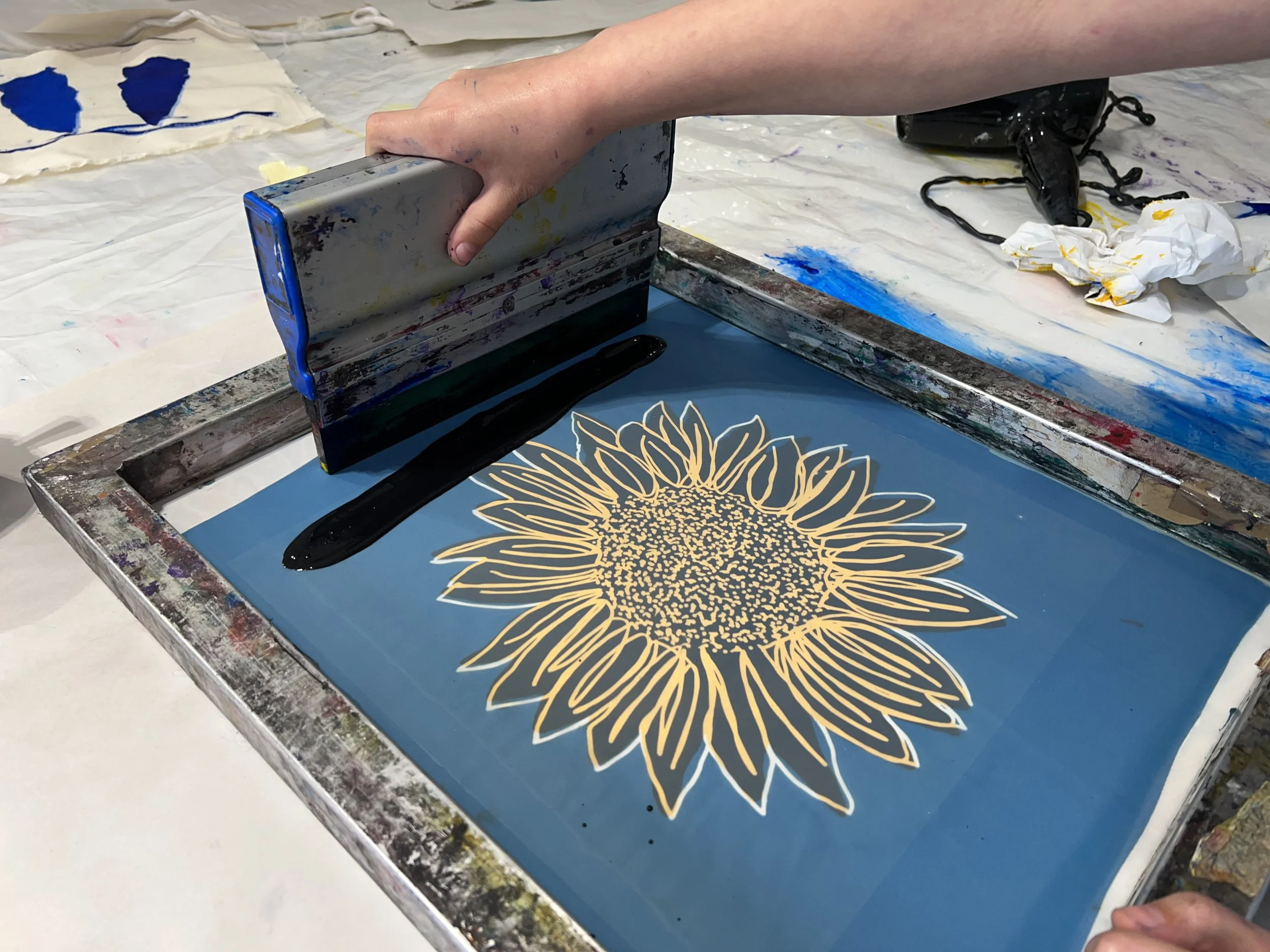
Is Screen Printing Profitable? 2026 Current Analysis, Cost Calculation, and Real Earning Potential.

Is screen printing a profitable business? This question is one of the most frequently researched topics, especially for entrepreneurs looking to start their own workshops, textile manufacturers, promotional product sellers, and investors looking to enter e-commerce. Let's be clear: with the right equipment, the right positioning, the right customer segment, and a sustainable production plan, screen printing is a scalable and long-term production model that offers high profit margins. However, the determining factor here is not just "printing"; cost control, equipment quality, production speed, error rate, and brand reliability. It is about properly managing parameters such as these.
Especially those producing in Topkapı, Istanbul. OkanGökhan Screen Printing Machines, This offers a significant advantage for entrepreneurs who want to make this business model profitable with domestically produced machinery and equipment solutions. Because in screen printing, one of the biggest cost items is equipment, and imported machines with poor service support erode profitability in the long run. Okan Gökhan's production capacity makes a difference here.
Is Screen Printing Profitable? First, You Need to Understand the Business Model Correctly.
Screen printing is essentially a printing technique that involves transferring ink from a stencil (mold). However, it's important not to take a superficial look at it. In this business model;
- Textile printing (T-shirts, sweatshirts, bags)
- promotional product printing
- Printing on glass, metal, and plastic.
- Industrial label production
- Transfer printing production
- Custom design boutique production
Many different revenue streams can be created, such as these.
Those wishing to understand the basic principles of screen printing in detail should consult the comprehensive guides published previously:
👉 https://www.okangokhan.com/serigrafi-nedir-2025-rehberi/
👉 https://www.okangokhan.com/serigrafi-baski-nedir/
As seen in these examples, screen printing dramatically reduces unit costs in high-volume production. This is where profitability begins.
Where does the profit margin come from?
“The technical answer to the question "Is screen printing profitable?" is this: Yüksek adetli üretimde maliyet avantajı sağlar, sabit giderler kontrol altında tutulursa kâr oranı %40–%70 bandına kadar çıkabilir.
Let's illustrate this with an example:
- The raw cost of 1 printed t-shirt (t-shirt + dye + labor)
- Mold costs per unit decrease with a production volume of 1000 units.
- Mass production of the same design increases time efficiency.
- Production speed increases if the drying and fixing process is optimized.
This is where equipment quality comes into play. For example, the equipment used in the production process. Conveyor Dryer Fixing Tunnel
👉 https://www.okangokhan.com/urun/konveyor-kurutucu-fikse-tuneli/
In high-volume production, it saves time and standardizes paint fixation. If drying quality is poor, the return rate increases, which directly reduces profitability.
Those who want technical details about drying processes should definitely read this guide:
👉 https://www.okangokhan.com/konveyor-kurutucu-nedir-2025/
👉 https://www.okangokhan.com/fikse-tuneli-nedir-2025/
What is the initial cost? The first factor affecting profitability.
The first hurdle determining profitability in screen printing is the initial investment. This investment can be made in two ways:
1. Low-Budget Starter (Manual System)
- Manual printing press
- Molding (metal or aluminum frame)
- Ragle
- Paint
- Drying rack
For example, the following products are sufficient to start with:
👉 Screen Printing Machine, 4 Colors, 1 Station
https://www.okangokhan.com/urun/serigrafi-baski-tezgahi-4-renk-1-istasyon/
👉 T-shirt Printing Machine
https://www.okangokhan.com/urun/tisort-baski-tezgahi/
👉 Screen Printing Paint Drying Rack Rayk
https://www.okangokhan.com/urun/serigrafi-boya-kurutma-rafi-rayk/
👉 Screen Printing Squeegee
https://www.okangokhan.com/urun/serigrafi-ragle/
👉 3x3 Frame 50x70 Metal Mold
https://www.okangokhan.com/urun/3×3-cerceve-50×70-metal-kalip/
This equipment set allows for a low-budget but controlled start. It's ideal especially for home-based or small workshop ventures.
This guide is important for those who want to start at home:
👉 https://www.okangokhan.com/evde-serigrafi-baski-rehberi/
2. Medium and Large Scale Startups
This is where vacuum machines, semi-automatic systems, and high-volume dryers come into play.
👉 Screen Printing Vacuum Manual Printing Machine
https://www.okangokhan.com/urun/serigrafi-vakumlu-manuel-baski-makinesi/
👉 100x200 Screen Printing Vacuum Manual Printing Machine
https://www.okangokhan.com/urun/100×200-serigrafi-vakumlu-manuel-baski-makinesi/
👉 Semi-Automatic Screen Printing Machine
https://www.okangokhan.com/urun/yari-otomatik-serigrafi-baski-makinesi/
Vacuum systems minimize errors, especially in large-format printing. A reduction in error rates directly translates to cost control, which in turn means increased profits.
For the technical advantages of vacuum systems, please refer to this article:
👉 https://www.okangokhan.com/vakumlu-serigrafi-baski-makinasi-2025/
Which areas are more profitable?
The answer to the question of whether screen printing is profitable varies depending on the sector. The most profitable areas are:
- Corporate promotional textiles
- School t-shirt production
- Sports club products
- Boutique brand production
- Custom designed streetwear
Especially in the textile industry, comparing screen printing and digital printing is crucial:
👉 https://www.okangokhan.com/serigrafi-baski-mi-dijital-baski-mi/
In high-volume production, screen printing is much more profitable due to its advantageous unit cost.
Factors that Reduce Profitability
Let's be realistic. Screen printing doesn't always automatically generate profit. Losses are inevitable if these mistakes are made:
- Incorrect mesh selection.
👉 https://www.okangokhan.com/serigrafi-mesh-ipek-secimi/ - Film exit errors
👉 https://www.okangokhan.com/serigrafi-film-cikisi/ - Exposure setting errors
👉 https://www.okangokhan.com/serigrafi-kalip-pozlama-ayarlari/ - Machine settings errors
👉 https://www.okangokhan.com/serigrafi-baski-makinesi-ayar-hatalari/ - Printing errors
👉 https://www.okangokhan.com/serigrafi-baski-hatalari/
Without knowledge of these technical details, paint waste, mold burning, customer returns, and wasted time will occur. This is where experience and the right equipment become critical.
Why does Okan Gökhan increase profitability?
When we look at the question of whether screen printing is profitable from Okan Gökhan's perspective, the following advantages stand out:
- Locally produced, fast spare parts.
- Access to vacuum motors and spare parts.
👉 https://www.okangokhan.com/urun-kategorisi/yedek-parca/vakum-motoru/ - Durable frame systems
👉 https://www.okangokhan.com/urun/4×4-cerceve-50×70-aluminyum-kalip/ - Professional paint options
👉 https://www.okangokhan.com/urun/serigrafi-boya/
These advantages reduce maintenance costs in the long run. When maintenance costs decrease, net profit increases.
How is real profit generated in screen printing?
“"Is screen printing profitable?" is easy to answer superficially, but the real picture lies in the production mathematics. Profit in this business depends on...; quantity, speed, waste rate, paint consumption, mold life, and customer portfolio It is the sum of technical parameters such as these.
For example, let's say you order 500 single-color t-shirts. In digital printing, each product is printed individually, and the ink cost is high. However, with screen printing, a mold is prepared once, and mass production begins. Although the mold cost may seem high initially, the unit cost decreases dramatically as the quantity increases. This is precisely the economy of scale advantage of screen printing.
At this point, plate quality and frame selection become critical. If robust and durable frame systems are not used, the plate will deform quickly and re-exposure will be required. This means increased costs. For professional frame options:
👉 https://www.okangokhan.com/urun/4×4-cerceve-40×60-aluminyum-kalip/
👉 https://www.okangokhan.com/urun/3×3-cerceve-40×60-metal-kalip/
Aluminum molds operate more stably in the long term and provide a clear advantage in high-volume production.
Production Rate = Profitability
The second key to answering the question of whether screen printing is profitable is production speed. There is a significant difference between the hourly printing capacity of a manual system and that of a semi-automatic system.
For semi-automatic systems:
👉 https://www.okangokhan.com/urun/yari-otomatik-yuvarlak-baski-makinesi/
👉 https://www.okangokhan.com/yari-otomatik-yuvarlak-baski-makinesi/
These systems save time, especially in textile workshops. Saving time = more work = more turnover.
In addition, octopus-shaped systems offer significant advantages in multicolored designs:
👉 https://www.okangokhan.com/ahtapot-baski-makinasi-rehberi/
In multi-color printing, registration errors render the product unusable. Therefore, machine stability is a direct determinant of profitability.
Paint and Supplies Management
Another factor affecting profitability is paint consumption. Using more paint than necessary, incorrect squeegee stiffness, or the wrong angle increases costs.
Using a professional squeegee and squeegee rubber is critical at this point:
👉 https://www.okangokhan.com/urun/serigrafi-ragle-lastigi/
You also need to choose the right paint:
👉 https://www.okangokhan.com/serigrafi-boyasi-nedir-2025/
Choosing the wrong paint can create drying problems and increase the risk of returns. An incorrect drying system can also cause damage.
Drying rack solutions:
👉 https://www.okangokhan.com/urun/serigrafi-boya-kurutma-rafi-50×70/
👉 https://www.okangokhan.com/kurutma-rafi-nedir/
Drying racks offer a cost advantage in small workshops, while conveyor systems are essential for large-scale production.
The Impact of Workshop Setup on Profitability
A poorly planned workshop will reduce profitability, even with the right equipment. The workshop layout, ventilation, drying area, and mold preparation section must be properly organized.
Detailed installation guide:
👉 https://www.okangokhan.com/serigrafi-atolyesi-kurmak-2025-rehberi/
Proper workshop planning accelerates workflow and increases staff productivity. This, in turn, translates to operational profitability.
Brand Trust Factor in Profitability
Another aspect of the question of whether screen printing is profitable is brand perception. If you produce high-quality prints, customers will return. Repeat customers reduce costs and lower advertising expenses.
Why is quality printing important?
👉 https://www.okangokhan.com/serigrafi-baski-kaliteli-midir/
If quality standardization is ensured, you won't have to engage in price competition. This will increase net profit.
Long-Term Profitability and Spare Parts Advantage
One of the most critical issues for screen printing machines is service and spare parts. For imported machines, waiting for parts can halt production. If production stops, turnover drops to zero.
Spare parts access:
👉 https://www.okangokhan.com/urun-kategorisi/yedek-parca/doner-lastik-tekerlek/
This is where OkanGökhan's local production advantage comes into play. Rapid response and parts availability ensure production continuity. Continuity = sustainable profitability.
Competitive Advantage: Screen Printing vs. Digital Printing
Many people think "digital printing is easier." However, screen printing offers a cost advantage for high-volume orders. The unit cost is particularly lower for orders of 100 or more units.
Comparative analysis:
👉 https://www.okangokhan.com/serigrafi-baski-mi-dijital-baski-mi/
Therefore, screen printing is a more profitable model for businesses that operate in bulk.
Realistic Conclusion
Is screen printing a profitable business?
Yes, but under these conditions:
- The right equipment will be selected.
- Consumables will be used wisely.
- The workshop layout will be optimized.
- High volume customer targeting will be implemented.
- The quality standard will be maintained.
In a system built with a manufacturer-supported, engineering-based machinery infrastructure like that of OkanGökhan, the return on investment period is significantly shortened. This is because the real profit in this business comes from the robustness of the machinery, the continuity of production, and the low error rate.
Is Screen Printing Profitable? Detailed Cost and Profit Analysis.
In the first part, we made the following clear: Is screen printing a profitable business? The answer to that question might be "yes," but it entirely depends on the investment plan, production discipline, and equipment quality. Now let's put the matter on a more technical and mathematical footing. In this section, we will talk in terms of real figures.
1️⃣ Small-Scale Workshop Scenario (Starting Model)
Let's say you've rented a 40-60 m² workshop. Your goal is to produce school t-shirts, promotional prints, and boutique brand products.
Initial Equipment Investment
- 4-Color 1-Station Printing Press
👉 https://www.okangokhan.com/urun/serigrafi-baski-tezgahi-4-renk-1-istasyon/ - Screen Printing Vacuum Manual Printing Machine
👉 https://www.okangokhan.com/urun/serigrafi-vakumlu-manuel-baski-makinesi/ - Drying Rack
👉 https://www.okangokhan.com/urun/serigrafi-boya-kurutma-rafi-rayk/ - Frame and Mold
👉 https://www.okangokhan.com/urun/3×3-cerceve-50×70-metal-kalip/ - Squeegee and paint
👉 https://www.okangokhan.com/urun/serigrafi-boya/
This kit can be a good starting point. In small workshops, the key is to keep the investment controlled. With this model, you reduce risk by keeping the initial investment at a reasonable level.
2️⃣ Monthly Fixed Expense Calculation
Let's do an example calculation on the scale of Istanbul:
- Rent: 25,000 – 40,000 TL
- Electricity: 3,000 – 6,000 TL
- Staff (1 skilled worker): 20,000 – 25,000 TL
- Average cost of consumables: 10,000 – 15,000 TL
- Other expenses: 5,000 TL
Total monthly expenses are approximately: 65,000 – 90,000 TL
Now the main question is: How many copies will you need to print to cover this expense?
3️⃣ Production Capacity and Turnover Calculation
With a manual system, 200-400 prints can be made per day. Let's calculate based on an average of 250 prints.
Let's assume they work 22 days a month:
250 x 22 = 5,500 printouts
Let's assume the average net profit from one print run is 25 TL.
5,500 x 25 TL = 137,500 TL monthly gross profit
Let's deduct the expenses (approximately 80,000 TL):
Net monthly earnings: approximately 57,000 TL
This is just for single-color or simple design scenarios. The unit price increases for multi-color prints.
This is where the answer to the question "Is screen printing profitable?" becomes clear. Even in a small workshop model, satisfactory profitability is possible with the right customer portfolio.
4️⃣ Medium-Scale Production Scenario
Now let's scale up the system. Imagine using a semi-automatic machine and a conveyor dryer.
👉 https://www.okangokhan.com/urun/yari-otomatik-serigrafi-baski-makinesi/
👉 https://www.okangokhan.com/urun/konveyor-kurutucu-fikse-tuneli/
This system increases production speed by at least twofold.
Daily capacity: 600 – 1,000 units
Monthly capacity: 13,000 – 20,000 units
Even if we calculate an average net profit of 20 TL:
15,000 x 20 TL = 300,000 TL gross profit
Let's assume expenses have increased (staff, electricity, etc.): 150,000 TL
Net profit: approximately 150,000 TL
This is where economies of scale come into play. For high-volume orders, screen printing offers a significant advantage over digital printing.
For a detailed comparison:
👉 https://www.okangokhan.com/serigrafi-baski-mi-dijital-baski-mi/
5️⃣ Technical Factors That Increase Profitability
✔ Choosing the Right Mesh
👉 https://www.okangokhan.com/serigrafi-mesh-ipek-secimi/
Incorrect mesh size increases dye consumption and raises waste rates.
✔ Exposure Setting
👉 https://www.okangokhan.com/serigrafi-kalip-pozlama-ayarlari/
Incorrect exposure ruins the mold, leading to remanufacturing costs.
✔ Machine Stability
👉 https://www.okangokhan.com/serigrafi-baski-makinesi-ayar-hatalari/
Slippage error = product that goes to waste.
The biggest advantage of OkanGökhan machines is this: robust body, precise adjustment mechanism and long service life.
6️⃣ The Biggest Mistake That Reduces Profitability: Choosing Cheap Machinery
There are low-priced machines on the market with poor service support. They may seem attractive at first glance, but:
- The chassis flexes.
- The print slides.
- The vacuum system remains weak.
- No part available.
When production stops, profits drop to zero. Therefore, working with brands that have the advantage of local production and service provides a strategic advantage.
For example, for large-scale production:
👉 https://www.okangokhan.com/urun/100×200-serigrafi-vakumlu-manuel-baski-makinesi/
These types of machines are designed for industrial production.
7️⃣ Niche Area Strategy for Profitability
The most strategic answer to the question of whether screen printing is profitable is this:
You'll be more profitable if you operate in a niche market rather than the general market.
Examples of niche areas:
- Organic textile brands
- Streetwear
- Special design limited edition prints
- Sports club uniforms
- School and university club merchandise
These areas have high volume and high repeat order rates.
8️⃣ Return on Investment (ROI)
The payback period for a small workshop investment is approximately 6–12 months.
In medium-scale production, this period can be reduced to 4–8 months.
Of course, this depends on the customer portfolio. But with the right equipment and the right marketing, screen printing is a high-return investment model.
Is Screen Printing Profitable? Marketing, Growth Strategy, and 2026 Trend Analysis
In the first two sections, we clearly laid out the production mathematics and cost analysis. Now we are moving on to the strategic side of things. Because Is screen printing a profitable business? The ultimate answer to this question is determined not only by the machine, but also by the customer acquisition model, pricing strategy, and market positioning.
In this section, we will cover the following:
- How to find customers?
- How is the price determined?
- How to manage competition?
- What are the screen printing trends for 2026?
- What do international sources say about screen printing?
1️⃣ Customer Acquisition Strategy: The Key to Profitability
The biggest mistake in screen printing is the "I'll buy the machine, and customers will come" mentality. The correct approach is this:
First, market analysis, then production capacity planning.
Target customer groups:
- Schools (graduation t-shirt)
- sports clubs
- Event management companies
- Corporate companies (promotional textiles)
- boutique brands that do e-commerce
Screen printing remains the most profitable production model, especially for e-commerce brands, because costs decrease with high-volume production.
To see the historical and technical background of screen printing art:
https://www.okangokhan.com/serigrafi-baski-sanati/
2️⃣ Pricing Strategy
“Pricing plays a critical role in answering the question, "Is screen printing profitable?".
When setting prices:
- Number of printing colors
- Piece
- Fabric type
- Mold cost
- Drying time
- Design difficulty level
is taken into account.
A low-price policy is not sustainable. Businesses that produce quality compete on value, not on price.
Why is high-quality printing an advantage?
https://www.okangokhan.com/serigrafi-baski-kaliteli-midir/
High quality attracts repeat customers, reducing advertising costs.
3️⃣ Professionalization in Production
For someone looking to expand their screen printing workshop, these points are crucial:
- Use of vacuum system
https://www.okangokhan.com/urun/70×200-serigrafi-vakumlu-manuel-baski-makinesi/ - Semi-automatic system
https://www.okangokhan.com/urun/yari-otomatik-yuvarlak-baski-makinesi/ - Professional workshop plan
https://www.okangokhan.com/serigrafi-atolyesi-kurmak-2025-rehberi/ - Using the right materials
https://www.okangokhan.com/serigrafi-malzemeleri-profesyonel-baski-rehberi/
Once this infrastructure is in place, production will be standardized. Standardization = profitability.
4️⃣ 2026 Screen Printing Trends
Screen printing remains a strong production model worldwide, especially in the textile industry.
International sources:
- https://en.wikipedia.org/wiki/Screen_printing
- https://www.printful.com/blog/what-is-screen-printing
- https://www.metmuseum.org/perspectives/materials-and-techniques-printmaking-screenprint
As seen in these sources, screen printing:
- Provides high opacity.
- It produces long-lasting prints.
- It has advantages in mass production.
- Used in industrial applications.
Trends for 2026:
- Printing on organic textiles
- Minimalist design, monochrome production.
- The rise of streetwear culture
- Special limited edition
- Local production – fast delivery model.
This sector is growing in Türkiye. This is where the advantage of local producers comes into play. Workshops that can produce quickly with OkanGökhan machines gain a market advantage.
5️⃣ Growth Model That Increases Profitability
Step-by-step growth strategy:
- Start with the manual system.
- Create a regular customer base
- Switch to a semi-automatic system.
- Add conveyor dryer
- Increase the number of staff.
- Establish a wholesale customer network.
This model accelerates the return on investment period.
Paint and consumable quality plays a critical role in growth:
https://www.okangokhan.com/urun/serigrafi-boya/
6️⃣ How do you manage competition?
There will always be workshops that do cheap work in the market. However:
- Low price = low quality
- Low quality = customer loss
It improves quality in the long run.
For machine stability:
https://www.okangokhan.com/serigrafi-baski-makinasi-nedir-2025/
In screen printing, profits decrease if there is no technical discipline.
7️⃣ Realistic Results
Is screen printing a profitable business?
If:
- If you choose the right equipment
- If you use a manufacturer-supported machine like OkanGökhan
- If you correctly identify the customer segment
- If you set your pricing strategically
- If you reduce the fire rate
Yes, screen printing is a highly profitable production model.
This sector is still growing. Although digitalization is increasing, screen printing remains the leader in high-volume textile printing.
Workshops established with OkanGökhan's infrastructure ensure long-term production thanks to durable chassis, vacuum power, spare parts access, and engineering quality. This, in turn, ensures sustainable profitability.
Is Screen Printing a Profitable Business? (FAQ)
1) Is screen printing profitable?
Yes, with the right equipment, pricing, and a consistent customer portfolio, screen printing can offer high profit margins. Especially in high-volume textile production, unit costs decrease and net profitability increases. Using vacuum and semi-automatic systems increases production efficiency and reduces waste.
2) How much capital is needed to start a screen printing business?
The initial capital varies depending on the size of the workshop. You can start with a low budget using a manual system. For example:
- printing press
- Frame and molding
- Ragle
- Paint
- Drying rack
Detailed beginner's guide:
https://www.okangokhan.com/serigrafi-malzemeleri-profesyonel-baski-rehberi/
Medium-scale production requires investment in semi-automatic machines and conveyor dryers.
3) Is screen printing or digital printing more cost-effective?
Screen printing is more profitable for high-volume production because the plate cost per unit decreases as the quantity increases. Digital printing is advantageous for low-volume jobs. Comparative analysis:
https://www.okangokhan.com/serigrafi-baski-mi-dijital-baski-mi/
4) How much can you earn per month in screen printing?
Small workshops can achieve a net profit of 40,000 – 60,000 TL per month. In medium-sized production facilities, this figure can rise to 100,000 TL and above. However, this depends on the number of customers, production capacity, and pricing strategy.
5) How long does it take for a screen printing business to pay for itself?
The return on investment is possible within an average of 6–12 months. This period can be even shorter in semi-automatic systems.
6) Which is the most profitable screen printing field?
- School t-shirts
- Sports club uniforms
- Corporate promotional products
- Streetwear brands
- Special limited edition collections
Repeat order rates are high in these areas.
7) Is screen printing permanent?
Yes. Screen printing done with the right ink and the correct fixing process is long-lasting. Quality details:
https://www.okangokhan.com/serigrafi-baski-kaliteli-midir/
8) What should be considered when choosing a screen printing machine?
- Chassis strength
- Vacuum power
- Adjustment sensitivity
- Access to spare parts
- Producer support
Machine guide:
https://www.okangokhan.com/serigrafi-baski-makinasi-secimi/
9) Does a vacuum machine increase profitability?
Yes. The vacuum system prevents print slippage and reduces waste. As waste decreases, net profit increases.
https://www.okangokhan.com/urun/serigrafi-vakumlu-manuel-baski-makinesi/
10) What is the biggest cost item in screen printing?
Rent and staff expenses constitute a large portion of fixed costs. Profitability will decrease if supplies management and paint waste are not controlled.
11) Is learning screen printing difficult?
Basic technical knowledge and practice are key to learning. Mesh selection, exposure settings, and printing technique are important.
https://www.okangokhan.com/serigrafi-mesh-ipek-secimi/
https://www.okangokhan.com/serigrafi-kalip-pozlama-ayarlari/
12) Can screen printing be done at home?
Yes, small-scale production can be done at home. However, a workshop is essential for professional production.
https://www.okangokhan.com/evde-serigrafi-baski-rehberi/
13) What types of inks are used for screen printing?
PVC-based, water-based, and textile paints are used. The choice should be made according to the surface to be painted.
https://www.okangokhan.com/urun/serigrafi-boya/
14) Is screen printing risky?
Choosing the wrong equipment, lacking a customer portfolio, and poor quality control are risks. However, with proper planning, it is a sustainable and profitable business model.
15) Is screen printing a promising industry?
Yes. The textile and promotional products sector continues to grow. International sources indicate that screen printing remains a strong method in industrial production.
- https://en.wikipedia.org/wiki/Screen_printing
- https://www.printful.com/blog/what-is-screen-printing
- https://www.metmuseum.org/perspectives/materials-and-techniques-printmaking-screenprint
16) What is the most important factor when setting up a screen printing workshop?
The right equipment and the right workshop planning.
https://www.okangokhan.com/serigrafi-atolyesi-kurmak-2025-rehberi/
17) Why are OkanGökhan machines advantageous?
- Locally produced
- Fast service
- Access to spare parts
- Robust body structure
- Long-lasting use
Machine infrastructure that ensures production continuity directly affects profitability.

