
Screen Printing Machines and Materials
Showing 1–12 of 81 results
-

60x80 Screen Printing Plate Washing Booth
45,600.00 ₺ VAT Included -

60x110 Screen Printing Plate Washing Booth
48,000.00 ₺ VAT Included -
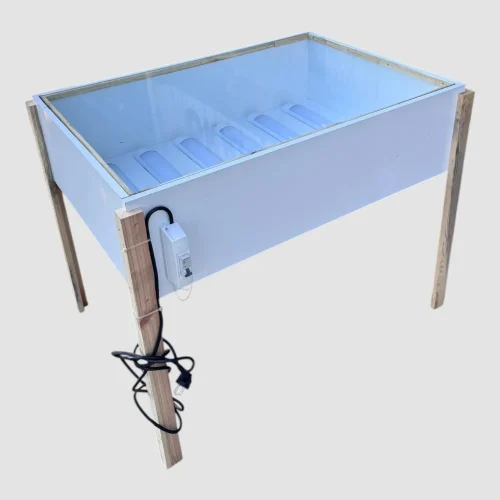
70x100 Screen Printing Exposure Machine
19,200.00 ₺ VAT Included -

50x70 Screen Printing Exposure Machine
14,400.00 ₺ VAT Included -

Desk Spray (Thinner Based)
825.00 ₺ VAT Included -

Kopiglasmat Thinner
3,437.00 ₺ VAT Included -

Kopiglasmat Pasta
3,437.00 ₺ VAT Included -

Aydinger Darkener (Limpia Film)
3,200.00 ₺ VAT Included -

Norikop 10 HQ Water-Based - Solvent-Based
3,093.00 ₺ VAT Included -
Norikop 6 GT Solvent Based
2,406.00 ₺ VAT Included -
Norikop 2FP Solvent Based
2,406.00 ₺ VAT Included -
Norikop 7S Water-Based - Solvent-Based
2,406.00 ₺ VAT Included
How to Choose Screen Printing Machines and Materials?
Screen printing machines and materials should be selected together according to the surface to be printed, the product size, the production quantity, and the ink system to be used. A proper production line does not consist solely of a printing machine; the printing plate, exposure machine, plate washing booth, squeegee, ink, and drying equipment must be compatible with each other. You can review the products above and use the guide below to determine the product group that suits your needs.
OkanGökhan offers screen printing machines, drying systems, plate making equipment, printing plates, and auxiliary screen printing materials for workshops, printing businesses, and industrial production companies. In addition to standard products, custom size options are also available for suitable product groups.
Screen Printing Product Groups
Screen Printing Machines
Screen printing machines; It is used for printing on paper, cardboard, plastic, metal, glass, labels, promotional products, and various flat surfaces. When selecting a machine, the external dimensions of the product, the area to be printed, the table size, the mold size, and the production quantity should be considered together.
Manual printing presses can be used for small to medium-scale production. Vacuum printing presses are particularly helpful in holding flat products such as paper, cardboard, thin plastics, and similar materials stable on the printing table during printing. For large or long parts, instead of standard models, a table and body structure suitable for the product dimensions should be considered.
Screen Printing Drying Systems
Screen printing drying systems It includes drying rack and conveyor dryer options. The drying rack and rail are the same product. The screen printing drying rack (rail) allows printed products to be stored neatly without touching each other.
When selecting a conveyor dryer, the dimensions of the drying rack are not the only factors to consider; these include the width, length, number of shelves, shelf spacing, and the available space in the workshop for the product to be dried. For applications requiring heat-fixed or controlled drying, a conveyor dryer suitable for the paint and material being used should be evaluated.
Exposure Units
Screen printing exposure machines, It enables the preparation of the pattern on the emulsion-coated printing plate with controlled light. When selecting an exposure machine, not only the external dimensions of the device but also the external dimensions of the plate to be used and the exposureable clear area should be considered.
The plate must fit snugly onto the exposure surface, and light distribution must be sufficient across the entire printing area. For details such as fine lines, small text, and halftones, film density, emulsion, silkscreen number, light source, and exposure time all affect the result.
Screen Printing Plate Washing Booths
Mold washing cabinets, It is used to allow for more controlled processes such as pattern opening after exposure, plate cleaning after printing, and emulsion removal with appropriate chemicals.
The largest mold to be used should have its outer dimensions considered when selecting the cabinet. It is important that the mold can be moved freely inside the cabinet, that the water can be directed, and that the work area can be kept clean.
Screen Printing Plates
Screen printing plates, The plate is the basic equipment that enables the transfer of the design to the printing surface via paint. When determining the plate size, not only the design size but also the plate attachment of the machine, the squeegee movement area, and the working allowance to be left around the design should be taken into account.
Aluminum molds are preferred for their lightness and corrosion resistance, while metal molds are chosen depending on the application and budget. The mold profile, silk screen number, and stretching process should be determined according to the detail of the print and the ink to be used.
Screen Printing Materials and Accessories
Screen printing materials This includes emulsions, mold making products, adhesives, cleaning products, and consumables used in different printing stages. When selecting products, compatibility with the type of paint, cleaning chemical, and mold system to be used should be checked.
Screen printing auxiliary materials These include squeegees, squeegee rubbers, retarders, and products that support the printing process. The hardness, sharpness, size, and chemical resistance of the squeegee rubber should be selected according to the printing surface and paint system.
For parts used in machinery and equipment. screen printing spare parts You can browse the category.
Selecting Screen Printing Equipment According to Needs
| Production needs | Product group to be examined | The main selection criterion |
|---|---|---|
| Printing on paper, cardboard, or thin flat products. | Vacuum printing machines | Printing area, bed size and vacuum surface. |
| Printing on plastic, metal, glass, or promotional products. | Manual or custom-sized printing machines | Product geometry, dimensions, and fastening method. |
| Keep printed products away from direct contact. | Drying rack (rail) | Product dimensions, number of shelves, and shelf spacing. |
| Heat drying or fixing | Conveyor dryer | Paint, material, temperature, and conveyor belt transit time. |
| Preparing a new screen printing plate. | Exposure machine | Largest mold size and light area. |
| Mold release and controlled washing | Mold washing cabinet | External dimensions of the mold and working area. |
| Transferring the design to the printing surface. | Printing plate, silk and squeegee | Pattern detail, paint and printing surface. |
Production Flow Required for Screen Printing
- Design and film production: The design to be printed is prepared in the appropriate size and with sufficient density.
- Mold selection: The silk count is determined using a pattern suitable for the design, machine, and product dimensions.
- Emulsion and exposure: The mold is prepared with emulsion, and the pattern is transferred using the appropriate exposure time.
- Mold washing: The unexposed areas are opened in a controlled manner to create a printing stencil.
- Machine settings: The mold, product, position, and printing height are adjusted appropriately.
- Paint and squeegee selection: A squeegee with the appropriate hardness and bristle shape, along with paint suitable for the printing surface, is used.
- Drying or fixing: The printed product is dried or fixed using the method required by the dyeing system.
- Cleaning: Molds and equipment are cleaned with products suitable for the paint and emulsion used.
Featured Screen Printing Products
- Screen printing vacuum manual printing machine
- 70x200 screen printing vacuum manual printing machine
- 50x70 screen printing exposure machine
- 70x100 screen printing exposure machine
- 60x80 screen printing plate washing booth
- Screen printing paint drying rack (rail)
- Screen printing squeegee rubber
Frequently Asked Questions About Screen Printing Machines and Supplies
What equipment is needed to start screen printing?
The basic requirements are a printing machine or apparatus, a printing plate of suitable size, silk screen printing, emulsion printing, exposure equipment, a squeegee, and ink suitable for the printing surface. Depending on the production method, a plate washing cabinet, drying rack, or conveyor dryer can also be added to the system.
How do you choose the size of a screen printing machine?
Machine dimensions are not selected solely based on pattern dimensions. The external dimensions of the product to be printed, the dimensions of the mold to be used, the squeegee movement, and the positioning of the product on the printing plate must all be considered together.
When is a vacuum printing machine necessary?
Vacuum build plates offer an advantage if flat products such as paper, cardboard, and thin plastics are likely to move during printing. For thick, heavy products, or products that require different methods of fixation, the need is evaluated according to the production method.
Are drying racks and rails different products?
No. Drying racks and rails refer to the same product. They are used to keep printed products separate on different shelves, without touching each other, and to allow them to dry evenly.
What size exposure camera should be?
The exposure surface must match the outer dimensions of the largest screen printing plate to be used. The plate must fit comfortably on the device, and the light must cover the required area homogeneously.
Why are mold washing cabinets used?
It helps to contain water and chemical splashes more effectively during mold opening, paint removal, and emulsion desiccation processes. It ensures a more organized workshop environment and easier mold cleaning.
Should aluminum molds or metal molds be preferred?
The choice should be made based on mold size, frequency of use, expected weight, working environment, and budget. Aluminum molds are lighter and more corrosion-resistant; metal molds, on the other hand, can be an economical option for different production needs.
Can all paints be used with the same silk and squeegee?
No. The viscosity of the paint, the pigment structure, the desired paint thickness, and the printing surface all affect the selection of the silk screen number and squeegee hardness. The compatibility of the paint, emulsion, silk screen, and cleaning chemicals should be checked.
Is it possible to have a custom-sized screen printing machine or drying rack made?
For suitable product groups, custom size options can be prepared by evaluating the dimensions of the part to be printed, the workspace, and production needs. Exact dimensions and usage information should be shared before providing a quote.
What information is needed to choose the right product?
The following information should be provided: a photograph of the product to be printed, its width, length, height, printing area, the surface to be used, daily production quantity, and, if applicable, the dimensions of the existing mold. This information will be used to select the appropriate machinery and auxiliary equipment.
Product Selection and Quotation
If you are unsure which screen printing machine or materials are suitable, you can provide an image of the product to be printed, its dimensions, printing area, and estimated production quantity. To view existing products, inquire about custom sizes, or request a quote, please contact us. Contact Okan Gökhan.