
Screen Printing Machines
Showing all 10 results
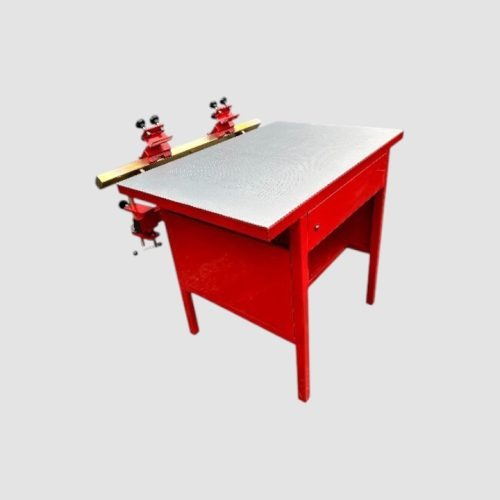
Manual Vacuum Screen Printing Machine
35,400.00 ₺ VAT Included
Semi-Automatic Screen Printing Machine for Desktop
114,000.00 ₺ VAT Included
Semi-Automatic Circular Printing Machine
150,000.00 ₺ VAT Included
T-shirt Printing Machine – Screen Printing Single Arm Printing Apparatus
12,000.00 ₺ VAT Included
100x200 Screen Printing Vacuum Manual Printing Machine
70,000.00 ₺ VAT Included
80x250 Vacuum-Free Manual Printing Machine
67,200.00 ₺ VAT Included
Screen Printing Desktop Printing Apparatus
7,800.00 ₺ VAT Included
70x200 Screen Printing Vacuum Manual Printing Machine
67,200.00 ₺ VAT Included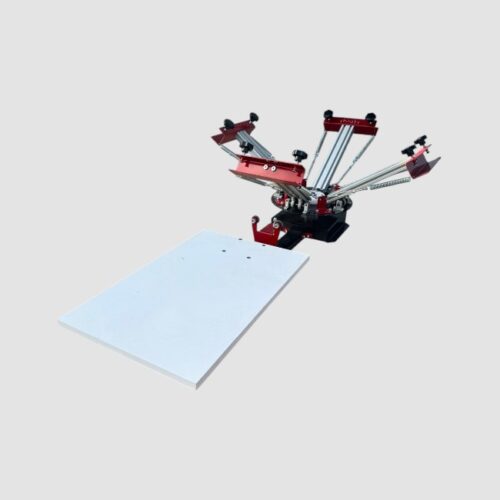
Desktop 4-Color 1-Station Screen Printing Machine
30,000.00 ₺ VAT Included
Screen Printing Stand
8,400.00 ₺ VAT Included
How to Choose a Screen Printing Machine?
A screen printing machine uses a squeegee and paint to transfer the design from a stencil onto the screen.
It is the basic production equipment that enables the transfer of material to the printing surface. The right machine;
the size, geometry, surface, and production quantity of the product to be printed
and should be selected according to the size of the mold to be used. Manual, vacuum,
Non-vacuum, desktop, floor-standing and semi-automatic screen printing machines.
They are not aimed at the same need.
When choosing a machine, it is not enough to look only at price or table size.
How the product will be fixed on the table, the mold's range of motion, the squeegee.
the transition, the printing position, the operator's working method, and post-printing.
The drying process should be considered together. A large machine for each task.
Not only is it not better, but a small device also has a smaller size and production capacity.
It may not be sufficient if it is not met.
Types of Screen Printing Machines
Vacuum Manual Screen Printing Machines
Vacuum build plates are used for printing flat or potentially mobile products.
It helps to hold things in place. Paper, cardboard, thin plastic, labels and
To reduce the sliding of the product on the table and the pressure on similar flat materials.
A vacuum system can be preferred to facilitate repetition.
Screen printing vacuum manual printing machine
Can be considered for standard flat surface printing needs. Longer prints
for studies needed in the field
70x200 vacuum manual printing machine
Alternatively, different options should be considered depending on the product size.
Large-Scale Vacuum and Non-Vacuum Printing Machines
If printing is to be done on large sheets, panels, long pieces or wide surfaces
the mold movement and the operator's working area are equal to the machine's table dimensions.
It is important to consider the product size, printing area, and the mold machine to be used before selecting the machine.
This needs to be clarified first.
For large flat surfaces
100x200 screen printing vacuum manual printing machine
can be examined. Methods that do not require vacuuming, or using long or different methods.
for parts that can be fixed
80x250 vacuum-free manual printing machine
assessable.
Desktop and Floor-Standing Printing Apparatus
Desktop and floor-standing units; for smaller spaces with limited workspace.
For those working with products or wanting to do controlled printing at a beginner level.
It can offer practical solutions for users. When selecting an apparatus to connect...
mold dimensions, printing table, product height, and workbench structure
should be taken into consideration.
- For small workspaces
screen printing desktop printing apparatus
- For projects requiring an independent body structure.
screen printing stand
- For textile and flat product printing.
T-shirt printing press and single-arm printing apparatus
- For multicolored textile printing
4-color, 1-station screen printing press
Semi-Automatic Screen Printing Machines
Semi-automatic machines; the squeegee movement, the printing cycle or the product
in productions where the layout needs to be managed in a more controlled manner
These can be evaluated. The machine's level of automation, printing surface, and product can be considered.
The geometry and the targeted production quantity should be examined together.
For flat products
semi-automatic desktop screen printing machine
;
for cylindrical or round product applications
semi-automatic circular printing machine
It can be examined.
Machine Selection Based on Printing Surface
| Product to be printed | The machine to be evaluated | Important selection criterion |
|---|---|---|
| Paper, cardboard, and thin, flat materials. | Vacuum manual printing machine | Table dimensions, vacuum area, and product fixation. |
| Plastic sheet, metal panel and glass | Manual vacuum or non-vacuum machine | Product dimensions, weight, height, and fastening method. |
| Long or wide industrial part | Large or custom size printing machine | Net printing area, plate dimensions and operator access |
| T-shirts, tote bags, and plain textile products. | Single-arm or multi-color textile loom | Plate structure, number of colors, and registration requirements. |
| Small promotional item | Desktop or floor-standing stand | Product clamping and mold movement range. |
| Cylindrical or round product | Semi-automatic machine suitable for circular printing. | Product diameter, printing circumference, and rotation system. |
How to Determine the Size of a Screen Printing Machine?
When determining machine dimensions, the width and height of the print design are the starting points;
However, that's not the only criterion. A larger pattern than the design is needed. The pattern
Includes paint area, squeegee start and end allowances, and edge margins.
It should be left undisturbed. The machine table should also allow the product to be printed on to move freely.
It should be large enough to accommodate it.
- Measure the width, length, and height of the product to be printed.
- Determine the clear printing area on the product.
- Clarify the outer dimensions of the mold to be used.
- Calculate the required working area for squeegee movement and paint allowance.
- Determine whether the product will be secured by vacuum suction or another method.
- Evaluate daily production volume and operator work schedule.
Choosing the exact machine size based solely on product photos is not accurate.
Before making an offer or selecting a product, the dimensions, printing area, surface, and
If possible, the technical drawing should be shared.
The Difference Between Vacuum and Non-Vacuum Printing Machines
In a vacuum machine, air is drawn through air channels or holes on the table.
The product is drawn towards the surface. This system is particularly suitable for lightweight and flat materials.
It reduces displacement during printing. It allows for repeated printing in the same location.
It can help secure the product in the tasks that need to be done.
In non-vacuum machines, the product is supported by its own weight, mechanical support, fixtures,
It can be fixed with an adhesive pad or another method suitable for production.
For heavy, long, or specially geometric parts where vacuum is not required, vacuum-free operation is used.
The system might be sufficient. The choice is not solely based on price difference, but also on the product's printing.
It should be done according to how it will be positioned during the process.
What equipment is needed along with a printing press?
A screen printing machine alone does not complete the production line. Printing
Other equipment affecting quality and production flow is compatible with the machine.
should be selected:
- For preparing the pattern
screen printing plate - To transfer the pattern to the mold.
exposure machine - To open and clean the mold
mold washing cabinet - To transfer the paint through the mold
squeegee and squeegee rubber - For holding or drying printed products
drying rack (rail) or conveyor dryer - For mold preparation and cleaning.
screen printing auxiliary materials
Frequently Asked Questions About Screen Printing Machines
Which screen printing machine should I buy?
The choice depends on the product's size, surface, shape, printing area, and daily production schedule.
It should be done according to the quantity. For paper and thin flat products, a vacuum system is used;
Vacuum-free or custom-sized systems for large, heavy, or specialized parts.
assessable.
Are the machine dimensions the same as the print dimensions?
No. Table size, plate size, and net printing area are different concepts.
Gaps around the pattern are due to squeegee action and die connection.
The stencil to be used must be larger than the printing design.
Is a vacuum build plate necessary for every printing job?
No. Vacuum is particularly useful for securing lightweight and flat materials.
Vacuum is required for heavy, thick products or products that can be fixed with fixtures.
It may not be available.
Can manual machines be used in mass production?
It depends on the product structure, print volume, operator setup, and expected cycle time.
Manual machines can be used at different production levels.
As capacity expectations increase, semi-automatic solutions should be considered.
Is it possible to print on a round product using a flat printing press?
Product movement differs on flat and round surfaces. In cylindrical products...
Since the product needs to be rotated in a controlled manner, the machine is suitable for circular printing.
or an apparatus must be used.
Which machine is suitable for t-shirt printing?
Single-arm textile attachment for monochrome or low-volume work;
Multicolor is used for prints where multiple colors need to be placed in the same position.
And a textile loom suitable for the recording settings can be evaluated.
Is it possible to have a custom-sized screen printing machine made?
In suitable production processes, the external dimensions of the product, the printing area, the mold dimensions, and the vacuum sealing are important factors.
Custom size options are available based on your needs and work schedule.
It can be prepared.
What information should I send for machine selection?
Product photo, width, length, height, net print area, print surface,
Daily target quantity and current sizing (if any) should be shared. Long or
It simplifies the selection process for dimensioned drawings of technical parts.
Do I also need a printing plate and a squeegee along with the printing press?
Yes. The printing press provides the mechanical movement; suitable for transferring the pattern.
A printing plate, silk, emulsion, squeegee, and paint suitable for the printing surface are required.
Is a drying rack necessary after printing?
If printed products need to be stored without touching each other, drying is necessary.
The rack (rail) simplifies the production process. The paint is fixed by heat.
If necessary, a suitable drying method for the paint and material should also be determined.
Screen Printing Machine Quotation and Product Selection
To select the printing machine, please provide the image, external dimensions, and clear specifications of the product to be printed.
You can share the printing area, surface type, and estimated production quantity.
Standard models, custom sizing options, and necessary accessories included with the machine.
to get information about equipment
Contact Okan Gökhan.