

What are Screen Printing Materials? Basic Equipment, Their Purposes, and a Professional Guide.
Screen printing is one of the most durable printing methods, applicable not only in the textile industry but also on glass, metal, wood, plexiglass, leather, and many other surfaces. Its widespread use stems from its low production cost and high print durability. However, owning the necessary machinery is not enough to achieve high-quality screen printing. A workshop needs a backbone of... screen printing materials, If not chosen correctly, it can dramatically reduce print quality and cause significant time losses in the workflow.
In this section, I detail the essential materials for a screen printing workshop, their intended use, ideal selection criteria, and why professionals prefer certain equipment. Further on, I not only provide information but also offer internal links to the right products to simplify the purchasing process.
1. Screen Printing Molds and Frames
The fundamental building block of screen printing is the plate. The quality of a print depends on the structure of the chosen frame, the mesh quality, the tension value, and the exposure sensitivity.
Mold types:
- Wooden frame moldings: It's affordable but not long-lasting.
- Metal frame moldings: This is the most preferred type in professional workshops.
- Aluminum frame moldings: Its lightweight, durable, and long-lasting stress-retaining structure makes it an industry standard.
Internal link to professional metal and aluminum molds:
- https://www.okangokhan.com/urun/3×3-cerceve-40×60-metal-kalip/
- https://www.okangokhan.com/urun/3×3-cerceve-50×70-metal-kalip/
- https://www.okangokhan.com/urun/4×4-cerceve-40×60-aluminyum-kalip/
- https://www.okangokhan.com/urun/4×4-cerceve-50×70-aluminyum-kalip/
These retain their shape during prolonged use and enhance print precision with tight mesh tension.
Detailed information about screen printing plates:
- Screen Printing Mesh Selection: https://www.okangokhan.com/serigrafi-mesh-ipek-secimi/
- Movie Release Guide: https://www.okangokhan.com/serigrafi-film-cikisi/
- Exposure Settings: https://www.okangokhan.com/serigrafi-kalip-pozlama-ayarlari/
2. Screen Printing Paints
The second most important step in the screen printing materials list is the paints. Choosing the wrong paint can damage the stencil and reduce the durability of the print.
Paints are generally divided into two categories:
- Water-based screen printing paint
- Plastisol screen printing ink
Professional paint link:
Also, auxiliary chemicals that optimize printing time:
- Screen printing retardant: https://www.okangokhan.com/urun/serigrafi-geciktirici/
In hot weather, especially for large print runs, it prevents the paint from freezing on the plate.
A detailed guide on the correct use of paints:
3. Squeegees and Squeegee Rubbers
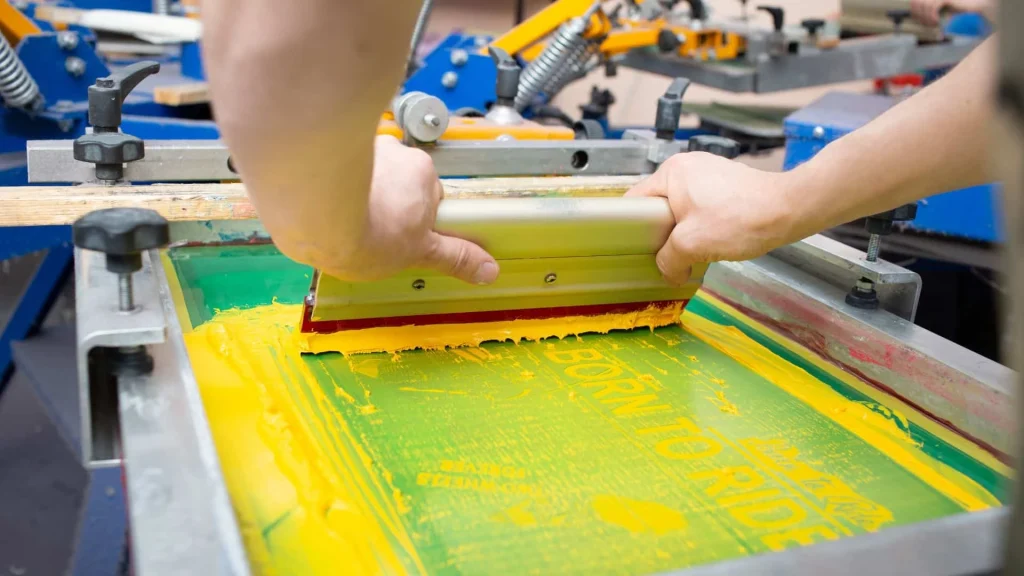
A squeegee is a printing element that transfers ink from the mesh to the surface. The stiffness, width, and rubber quality of the squeegee directly affect the print quality.
Professional products:
- https://www.okangokhan.com/urun/serigrafi-ragle/
- https://www.okangokhan.com/urun/serigrafi-ragle-lastigi/
Hardness levels:
- 60 Shore: Soft, ideal for textiles.
- 70 Shore: Versatile use
- 80 Shore: For hard surfaces such as glass and metal.
Advanced information about Ragle:
4. Drying Racks and Fixing Tunnels
In screen printing, it is impossible to achieve quality results without proper drying. If the paint does not adhere well to the surface, cracking, peeling, and discoloration will occur.
Professional drying equipment:
- Rayk Drying Rack: https://www.okangokhan.com/urun/serigrafi-boya-kurutma-rafi-rayk/
- 40x60 Drying Rack: https://www.okangokhan.com/urun/serigrafi-boya-kurutma-rafi-40×60/
- 50x70 Drying Rack: https://www.okangokhan.com/urun/serigrafi-boya-kurutma-rafi-50×70/
- Fixe Tunnel: https://www.okangokhan.com/urun/konveyor-kurutucu-fikse-tuneli/
- 100×185 Rayk Special Size Shelf:
https://www.okangokhan.com/urun/serigrafi-boya-kurutma-rafi-rayk-100×185/
This product specifically glass printing, textile, wood, metal part prints It provides high capacity in volume-intensive operations such as those mentioned.
Detailed blogs about drying:
- https://www.okangokhan.com/boya-kurutma-rafi-nedir-2025/
- https://www.okangokhan.com/kurutma-rafi-nedir/
5. Screen Printing Machines
The main equipment that determines the production capacity of a workshop is the printing presses.
Manual machines:
- https://www.okangokhan.com/urun/serigrafi-ayakli-baski-aparati/
- https://www.okangokhan.com/urun/serigrafi-baski-tezgahi-4-renk-1-istasyon/
- https://www.okangokhan.com/urun/serigrafi-masaustu-baski-aparati/
Professional vacuum machines:
- https://www.okangokhan.com/urun/70×200-serigrafi-vakumlu-manuel-baski-makinesi/
- https://www.okangokhan.com/urun/100×200-serigrafi-vakumlu-manuel-baski-makinesi/
- https://www.okangokhan.com/urun/80×250-vakumsuz-manuel-baski-makinesi/
Blog guide:
6. Materials Required for Mold Preparation and Exposure
Another critical category within screen printing materials is exposure equipment:
- Exposure lamp
- Light-sensitive emulsion
- Stripping knife
- Washing gun
- High-pressure water gun
Detailed exposure guide:
External Sourcing Recommendations
- https://www.metmuseum.org/perspectives/materials-and-techniques-printmaking-screenprint
- https://en.wikipedia.org/wiki/Screen_printing
- https://www.ynvisible.com/news-inspiration/what-is-screen-printing
- https://www.printful.com/blog/what-is-screen-printing
A Guide to Increasing Production Efficiency with Professional Screen Printing Materials
Competition in the screen printing industry has increased significantly in recent years. With a wide range of applications from textile printing to glass printing, metal label production to wood decoration printing, success in screen printing depends on two fundamental factors: Choosing the right screen printing materials And using the materials correctly. In this section, I present a comprehensive roadmap for workshops looking to increase their production volume or preparing to move to a more professional level.
Purchasing just a single machine or plate set is not enough for quality printing. The entire workshop—that is, the printing table, vacuum system, drying racks, fixing tunnel, mesh quality, squeegee hardness, ink type, exposure equipment, and even the workflow layout—directly determines print quality. Therefore, this section has been prepared as a "workshop optimization guide" for those who want to move to professional production.
1. Professional Selection Criteria for Screen Printing Machines
Among screen printing equipment, the printing machine is the most critical element. Choosing the right machine affects not only print quality but also production speed and employee productivity. Understanding the differences between manual, semi-automatic, and fully automatic machines is therefore crucial.
Manual Looms (For Beginner and Intermediate Level Workshops)
- Easy to use.
- Affordable cost
- Ideal for beginners.
- Suitable for printing on t-shirts, bags, and textiles.
- Fast repetition capacity in lightweight materials.
- Advantage: It takes up little space and has low investment costs.
- https://www.okangokhan.com/urun/serigrafi-ayakli-baski-aparati/
- https://www.okangokhan.com/urun/serigrafi-baski-tezgahi-4-renk-1-istasyon/
- https://www.okangokhan.com/urun/serigrafi-masaustu-baski-aparati/
These machines are particularly preferred by small businesses starting out. They are a very sensible solution for those who want to start a business at a low cost.
Vacuum Manual Screen Printing Machines (For Professional Workshops)
Vacuum system especially glass printing, metal plate printing, plexiglass printing, automotive parts, advertising sign printing This is vital in applications involving flat surfaces. Vacuum holds the workpiece steady during printing, eliminating any risk of movement.
Professional vacuum cleaners:
- https://www.okangokhan.com/urun/70×200-serigrafi-vakumlu-manuel-baski-makinesi/
- https://www.okangokhan.com/urun/100×200-serigrafi-vakumlu-manuel-baski-makinesi/
Non-vacuum model (an economical solution for large parts):
These machines are preferred by companies that require high precision. They are practically indispensable for workshops working in the glass industry.
Semi-Automatic Screen Printing Machines (for Industrial Production)
Semi-automatic machines have become standard in high-volume printing businesses. The motorized squeegee movement ensures consistent print quality.
Related product:
Also for round surface prints:
The advantages of these machines:
- Consistent pressure and speed with every print.
- Operator-related errors are reduced.
- High quantities are produced in a short time.
- Ideal for businesses that do contract printing.
A blog guide on the subject:
2. Professional Management of the Drying Process
In the list of screen printing materials, drying equipment is the second most important group. Most of the biggest errors in printing are due to drying issues.
Incorrect drying can lead to the following problems:
- Color fading
- Paint cracking
- Peeling
- The print comes off during washing.
- Blistering in varnish applications
- Surface mismatch in glass printing.
The Importance of Using a Drying Rack
Drying racks increase production capacity by organizing workflows, especially in workshops with high-volume printing. Instead of drying on a workbench, using a rack system to allow air circulation for drying is both safer and faster.
Professional shelf products:
- https://www.okangokhan.com/urun/serigrafi-boya-kurutma-rafi-rayk/
- https://www.okangokhan.com/urun/serigrafi-boya-kurutma-rafi-40×60/
- https://www.okangokhan.com/urun/serigrafi-boya-kurutma-rafi-50×70/
- Newly added large size model:
https://www.okangokhan.com/urun/serigrafi-boya-kurutma-rafi-rayk-100×185/
This large model especially glass printers, automotive label manufacturers, plexiglass sign manufacturers And wood decor manufacturers It is very suitable for.
Blog guide:
Fixing Tunnel – The Scientific Way to Fix Paint
Many novice users find it difficult to understand why a fixing tunnel is so important. However, the fixing tunnel is the most critical piece of equipment that enables the dye to chemically bond to the fabric or surface.
Professional tunnel:
These tunnels maintain the ideal temperature, ensuring the paint adheres perfectly to the surface.
Related blog post:
3. Workshop Layout and Materials Required for Production Flow
Proper layout prevents workplace accidents, shortens production time, and improves print quality. Screen printing equipment is not limited to printing machines; workshop layout is just as important as the machines themselves.
The professional workflow should be as follows:
- Film output area
- Mold preparation and exposure section
- Printing Machines Department
- Drying rack area
- Fixing tunnel and packaging section
The transitions between areas should be as short and ergonomic as possible.
Here are some blog recommendations on this topic.
- Establishing a Screen Printing Workshop: https://www.okangokhan.com/serigrafi-atolyesi-kurmak-2025-rehberi/
- What is Screen Printing? https://www.okangokhan.com/serigrafi-nedir-2025-rehberi/
- Screen Printing Supplies Guide: https://www.okangokhan.com/serigrafi-malzemeleri-profesyonel-baski-rehberi/
4. Advanced Auxiliary Screen Printing Materials
Here are some small but effective pieces of equipment that will take your workshop to a professional level:
- Stripping knives (in emulsion application)
- Mold washing gun
- Thinner and cleaning chemicals
- Mold remover
- Heat gun
- Spray adhesive (for stabilization in t-shirt printing)
- Measuring rulers and alignment devices
- Taping materials
Details about stabilizing a t-shirt with spray adhesive:
The Secrets, Mistakes, and Correct Usage Techniques for Achieving High-Quality Prints with Screen Printing Materials
Screen printing is an extremely powerful production method used in hundreds of different industries. However, the success of this technique depends not only on the printing machine but also on the materials used. screen printing materials, This depends on the correct functioning of many details together, including the type of paint used, mesh selection, exposure settings, squeegee stiffness, drying time, fixing tunnel temperature, and the operator's technical knowledge.
In this final episode, we explore both a screen printing workshop and... flawless printing as well as high production speed I provide a detailed guide outlining all the techniques needed to achieve this. I also explain the most common printing errors, correct material usage strategies, professional maintenance recommendations, and production-focused optimization tactics in detail.
These explanations are relevant to printers of all levels; whether you're a beginner or have been printing on glass, metal, textiles, or industrial parts for years, this information will directly improve your print quality.
1. Techniques for Optimizing Print Quality Through Mesh Selection
Among screen printing materials, mesh is considered the "DNA" of printing. Choosing the right mesh determines high transparency in jobs requiring thick ink and precision in jobs requiring fine detail.
Why is mesh tension important?
A mesh with low tension leads to the following problems:
- Serrated edges
- Excessive spreading of paint
- The colors mixing together
- Low level of detail.
- Machine misalignment
High-tension, high-quality meshes create clearer lines.
Internal links for professional mold products:
- https://www.okangokhan.com/urun/3×3-cerceve-50×70-metal-kalip/
- https://www.okangokhan.com/urun/4×4-cerceve-50×70-aluminyum-kalip/
For detailed academic information about mesh:
2. The Most Common Mistakes During the Exposure Process
Exposure is one of the most critical processes that determines the plate's lifespan, level of detail, and print quality.
Incorrect exposure leads to the following errors:
- The emulsion did not harden completely.
- The mold wears out quickly during printing.
- Missing small details
- Shadowing after exposure
- Tearing during mold washing
Exposure guide internal links:
- https://www.okangokhan.com/serigrafi-kalip-pozlama-ayarlari/
- https://www.okangokhan.com/serigrafi-film-cikisi/
Key tips for correct exposure:
- Distribute the light evenly, not from a single direction.
- The film black should be completely opaque.
- The emulsion thickness should be selected to suit the type of application.
- After exposure, the mold should be allowed to rest for at least 12 hours.
3. Dye Usage: Density, Additives, Retarders
When it comes to screen printing materials, paints form a vast world. The basic rule is this:
Good ink + the right additives = perfect print.
Professional paint links:
- https://www.okangokhan.com/urun/serigrafi-boya/
- https://www.okangokhan.com/urun/serigrafi-geciktirici/
Why are delay sprays used?
Especially when working in hot weather, water-based paints that dry quickly in the mold become muddy. This situation:
- Loss of detail
- Paint clogging in the mold
- The operator must constantly clean.
This leads to problems such as these.
Using the correct retarder dramatically improves print quality.
Further reading about paint:
4. Common Squeegee Mistakes and Professional Squeegee Techniques
The squeegee is the heart of printing. An incorrect squeegee leads to the following errors:
- Line break
- Too much or too little paint
- Orange color on the printing surface
- Loss of detail
- Low opacity
Professional products:
- https://www.okangokhan.com/urun/serigrafi-ragle/
- https://www.okangokhan.com/urun/serigrafi-ragle-lastigi/
Hardness level selection:
- 60 shore: Textiles, thick paint
- 70 shore: General use
- 80 shore: Glass, metal, plexiglass
Replacing the squeegee rubber regularly every 2–3 months significantly improves print quality.
5. Scientifically Proper Management of the Drying Process
Drying systems are often overlooked among screen printing materials. However, the longevity of the print depends entirely on proper drying.
Why is printing without using a drying rack flawed?
- Parts that don't get air will dry more slowly.
- The paint does not adhere evenly to the surface.
- Peeling occurs during washing.
- Color brightness decreases.
Professional shelving models:
- https://www.okangokhan.com/urun/serigrafi-boya-kurutma-rafi-rayk/
- https://www.okangokhan.com/urun/serigrafi-boya-kurutma-rafi-40×60/
- https://www.okangokhan.com/urun/serigrafi-boya-kurutma-rafi-50×70/
- New big model: https://www.okangokhan.com/urun/serigrafi-boya-kurutma-rafi-rayk-100×185/
Why is a fixation tunnel necessary?
Without a fixing tunnel, the paint will not chemically bond to the surface.
Professional tunnel:
More details:
6. Common Screen Printing Mistakes and Solutions
Hataların %70’i yanlış malzeme seçiminden kaynaklanır.
Related guide:
Common mistakes:
- Wrong mesh
- Low voltage
- Incorrect exposure time
- Bad squeegee
- Insufficient drying
- Incorrect paint density
- Machine misalignment
The solutions can be followed in detail:
- https://www.okangokhan.com/serigrafi-baskida-renk-tutarliligi/
- https://www.okangokhan.com/serigrafi-baski-makinesi-ayar-hatalari/
7. Professional Tips for Improving Your Screen Printing Workshop
These tips significantly improve production quality and speed:
1. Use at least 6 different meshes.
43, 55, 77, 90, 120, and 150 mesh values are the foundation of the workshop.
2. Work with 10–20 molds simultaneously.
There is no time loss when changing molds.
3. Every item should have a spare.
For example, squeegee rubber, mesh, spray adhesive, retardant.
4. Optimize the drying rack according to its fill level.
The high volume of the new 100×185 shelving unit offers a significant advantage.
5. Adjust the fixation tunnel temperature according to the type of work.
230–260°C is standard for textiles, while for glass printing it varies depending on the surface.
8. External Resources
- https://www.metmuseum.org/perspectives/materials-and-techniques-printmaking-screenprint
- https://en.wikipedia.org/wiki/Screen_printing
- https://www.ynvisible.com/news-inspiration/what-is-screen-printing
- https://www.printful.com/blog/what-is-screen-printing
FAQ (Frequently Asked Questions)
1. Which screen printing materials are the most essential for beginners?
The plate, squeegee, paint, printing apparatus, drying rack, and exposure equipment are sufficient for getting started.
2. Is it possible to print without a fixation tunnel?
Yes, but professional results won't be achieved; the paint will crack or fade quickly.
3. What screen printing materials are needed for glass printing?
High mesh (120–150), vacuum machine, glass paint, large drying rack (100×185).
4. At what temperature is screen printing ink fixed on textiles?
Generally 150–170°C, but 160–180°C is ideal for plastisol.
5. How does the stiffness of the screen printing squeegee affect the print?
A soft squeegee allows a lot of paint to pass through; a hard squeegee provides fine and detailed prints.


