
TYPES OF INK USED IN SCREEN PRINTING (COMPREHENSIVE GUIDE TO 2026)
WHAT ARE THE DIFFERENT TYPES OF INK USED IN SCREEN PRINTING AND WHY ARE THEY SO IMPORTANT?
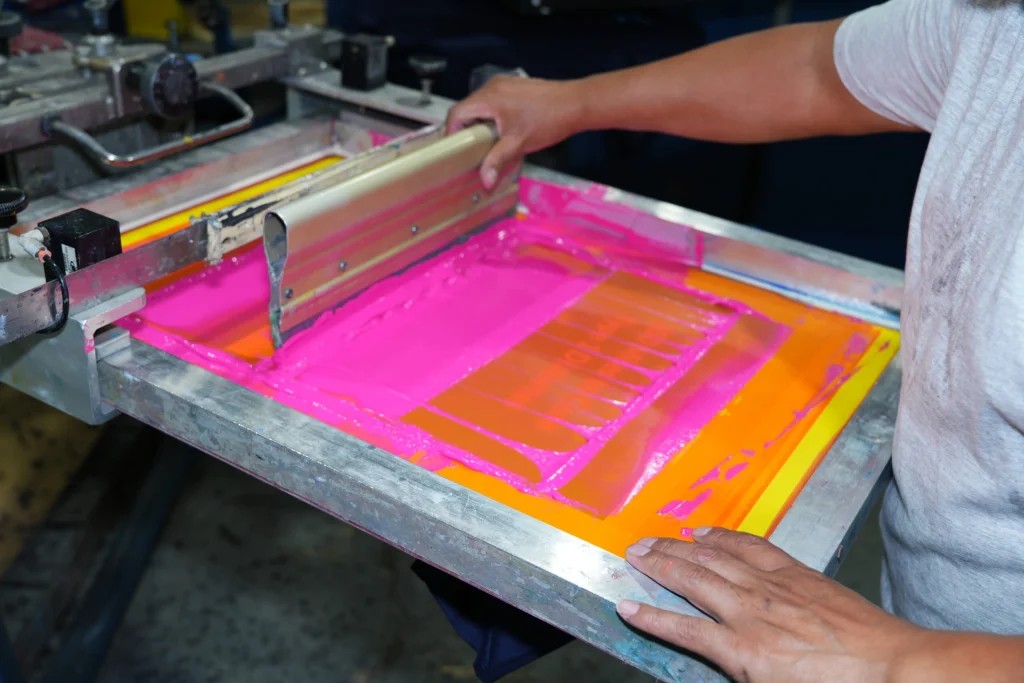
The ink used in the screen printing process is one of the most fundamental elements determining the fate of the print. No matter how high-quality the printing machine, plate, or squeegee is, It is impossible to achieve professional results from a screen printing job if the wrong ink has been chosen.. Therefore, in screen printing, the type of ink used is not just a technical matter; it is directly related to quality, durability, and customer satisfaction.
Screen printing inks vary depending on the surface to be printed on, the production volume, the drying system, and the desired results. Each surface, such as textile, glass, plastic, metal, or wood, requires different ink compositions and chemical properties. Therefore, an approach suggesting a "single type of screen printing ink" is incorrect. In professional screen printing production... The correct type of paint should be selected for each job..
In screen printing, ink types generally consist of pigment, binder, and solvent components. The proportions and chemical structures of these components directly affect the ink's adhesion to the surface, drying time, and durability. Therefore, when choosing screen printing ink, not only the color but also the technical characteristics of the ink should be considered.
The main problems that can arise from choosing the wrong paint are as follows:
- The print bleeds during washing.
- The colors fade quickly.
- Cracking or chipping from the surface
- Paint burning or hardening during drying.
- Customer returns and complaints
All of these problems arise when there is insufficient knowledge about the types of inks used in screen printing.
The most commonly used paint types in the screen printing industry today are:; PVC screen printing inks, water-based screen printing paints And plastisol paints Each type of paint stands out with its own application area, advantages, and drying requirements. Therefore, workshop owners and operators need to be able to clearly distinguish between these paint types.
For example, in a textile printing workshop, the same dye cannot be used on cotton fabric and polyester fabric. Similarly, different dye compositions should be preferred for light-colored t-shirts and dark-colored textiles. These distinctions directly affect the quality of screen printing.
One of the common mistakes at this point is... It is the incompatibility between the paint and the drying system.. In screen printing, the types of inks used must be compatible with the drying system. If high-temperature inks are used in a workshop employing rail drying racks, the print will never reach the desired quality. Similarly, in a production line with a fixing tunnel, using only air-drying inks will reduce efficiency.
The quality of screen printing inks affects not only the print result but also the production process. Choosing the right inks:
- Increases printing speed.
- It reduces the fire rate.
- It shortens the drying time.
- It ensures standardization in production.
Therefore, the topic of ink types in screen printing is of critical importance, especially for businesses looking to set up a workshop or expand their production.
Screen printing inks are also feeling of pressure It also has an effect on the fabric. Some dyes leave a fluffy and firm feel on the fabric, while others penetrate the fabric's texture more naturally. This preference should be determined according to customer expectations and product segment.
For example, while cost and speed are usually the primary considerations in promotional t-shirt printing, tactile feel and aesthetics are more important for boutique or premium textile brands. These two different goals require completely different approaches in the selection of ink types for screen printing.
At this point, it is frequently used in professional screen printing workshops. screen printing paint products, It offers solutions for different needs.
👉 https://www.okangokhan.com/urun/serigrafi-boya/
These product groups exhibit different performance in textile and flat surface printing and, when applied correctly, provide long-lasting results.
In screen printing, ink types should also be evaluated in terms of environmental factors. One of the main reasons for the increased interest in water-based screen printing inks in recent years is that they are more environmentally friendly and odorless. However, the drying requirements and application difficulties of these inks may not be suitable for every workshop.
Therefore, when deciding on the types of inks for screen printing, the following questions must be asked:
- What is the surface to be printed on?
- What is the production volume?
- Which drying system is being used?
- What level of durability is expected from the print?
- Who is the target customer group?
Choosing paint without clearly answering these questions will create problems in the long run, both in terms of quality and cost.
In this section, we discussed in detail why ink types are so important in screen printing and the effects of ink selection on print quality and the production process.
In the next episode What are PVC screen printing ink, water-based screen printing ink, and plastisol ink? What are the differences, advantages, and applications between them? We will delve into this topic in depth.
PVC, WATER BASED AND PLASTISOL SERIGRAPHY PAINTS
Features, Differences, and Applications
When discussing ink types in screen printing, three main ink groups stand out as the most commonly used in the industry: PVC screen printing inks, water-based screen printing paints And plastisol paints. These three types of ink differ significantly in terms of both chemical structure and application and drying requirements. In a professional screen printing workshop, selecting the right ink type directly impacts print quality and production efficiency.
The biggest mistake made at this point is the idea that "one type of paint will do the job." However, in screen printing, paint types should be evaluated separately according to the surface to be printed on, the production speed, the drying system, and the expected durability.
What is PVC Screen Printing Paint?
PVC screen printing ink, especially on non-textile surfaces It is a type of paint with high coverage, used in some specialized textile applications. Thanks to its PVC-based structure, it forms a strong layer on the surface and offers bright, vibrant colors. Therefore, it is frequently preferred in promotional products, plastic surfaces, artificial leather, and similar materials.
The most distinctive feature of PVC screen printing inks is their ability to adhere to the surface. film layer This structure ensures that the print appears clear and solid. This structure increases the paint's adhesion to the surface, but if proper drying is not done, there is a risk of cracking or hardening.
In workshops working with this type of paint, the equipment and auxiliary materials used are also of great importance. For example, choosing the right squeegee directly affects the thickness of the PVC paint and the clarity of the print.
👉 Products compatible with PVC and similar paints:
- Screen Printing Paint: https://www.okangokhan.com/urun/serigrafi-boya/
- Screen Printing Squeegee: https://www.okangokhan.com/urun/serigrafi-ragle/
- Screen Printing Squeegee Rubber: https://www.okangokhan.com/urun/serigrafi-ragle-lastigi/
PVC screen printing inks are generally controlled drying Rayk drying racks may be sufficient for short-term surface drying; however, for permanent results, it is recommended to supplement them with systems such as a fixation tunnel.
What is water-based screen printing ink?
Water-based screen printing inks are increasingly preferred in the screen printing industry in recent years due to growing environmental awareness. This type of ink is preferred because it contains no solvents or only very low levels of solvents. odorless, more environmentally friendly And it is user-friendly.
In screen printing, water-based paints are among the types of paints used, especially. cotton textiles It produces highly successful results. The dye penetrates the fabric fibers and leaves a more natural feel after printing. Therefore, it is frequently preferred by premium textile brands and boutique manufacturers.
However, the biggest disadvantage of water-based paints is, drying sensitivity. Ambient temperature, humidity, and air circulation directly affect the result. Therefore, rail drying racks become almost essential equipment in workshops working with water-based paints.
👉 Equipment used with water-based paints:
- Screen Printing Paint Drying Rack (Rayk): https://www.okangokhan.com/urun/serigrafi-boya-kurutma-rafi-rayk/
- 40x60 Drying Rack: https://www.okangokhan.com/urun/serigrafi-boya-kurutma-rafi-40×60/
- 50x70 Drying Rack: https://www.okangokhan.com/urun/serigrafi-boya-kurutma-rafi-50×70/
Another important point regarding water-based screen printing inks is... printing time. Paint can dry quickly if left exposed, causing the mold to clog. This is where the use of a retarder comes into play.
👉 Auxiliary product:
- Screen Printing Retardant: https://www.okangokhan.com/urun/serigrafi-geciktirici/
What is Plastisol Paint?
Plastisol paints, especially It is indispensable for mass production in the textile printing industry.. This type of paint does not dry at room temperature; it fixes when it reaches a certain temperature. This property makes plastisol paints ideal for high-volume production.
In screen printing, plastisol inks are among the types of inks used., high coverage, long shelf life And color stability It stands out with its vibrant results, even on dark fabrics. Furthermore, because it doesn't dry during printing, it allows for extended use.
However, the most critical requirement for plastisol paints is... It is a fixed tunnel.. Rayk shelves are not suitable for this type of paint. The paint needs to reach a specific temperature and time to become permanent.
👉 Drying system compatible with plastisol paint:
- Conveyor Dryer (Fixing Tunnel): https://www.okangokhan.com/urun/konveyor-kurutucu-fikse-tuneli/
In professional workshops working with plastisol inks, vacuum-operated manual or semi-automatic printing machines are generally preferred. These machines increase print repeatability and speed.
👉 Compatible printing equipment:
- Screen Printing Vacuum Manual Printing Machine: https://www.okangokhan.com/urun/serigrafi-vakumlu-manuel-baski-makinesi/
- Semi-Automatic Screen Printing Machine: https://www.okangokhan.com/urun/yari-otomatik-serigrafi-baski-makinesi/
Things to Consider When Choosing Paint Type
When selecting ink types for screen printing, the following criteria must be taken into consideration:
- The surface to be printed on (cotton, polyester, plastic, etc.)
- Production volume (boutique or mass production)
- The current drying system
- Durability expected from the print.
- Customer segment (promotional / premium)
Choosing the wrong paint is irreparable, even with the right equipment. Therefore, the paint, machine, and drying system must be carefully considered. as a whole It should be evaluated.
External Resources
For a broader technical perspective on screen printing and ink technologies, the following resources can be consulted:
- Screen Printing Overview – Wikipedia
https://en.wikipedia.org/wiki/Screen_printing - What Is Screen Printing? – Printful
https://www.printful.com/blog/what-is-screen-printing - Screenprint Techniques – The Met Museum
https://www.metmuseum.org/perspectives/materials-and-techniques-printmaking-screenprint
DRYING SYSTEMS ACCORDING TO PAINT TYPES
The Dangers of Incorrect Drying and Choosing the Right System
In screen printing, another issue as important as the types of inks is... the paint needs to dry properly.. The problems frequently encountered in practice are often not due to paint quality; incorrect drying method or incompatible equipment This is due to its usage. Therefore, in screen printing, the paint and drying system should not be considered independently of each other.
When selecting inks for professional screen printing workshops, the existing drying system must be taken into account. Otherwise, even if the print looks good initially, serious quality problems will arise after use and washing.
What is improper drying and why does it occur?
Incorrect drying can cause the screen printing ink to dry. Not fixed within the time, temperature and weather conditions recommended by the manufacturer. This is the situation. This error usually occurs for the following reasons:
- Using a drying system unsuitable for the type of paint.
- Keeping the drying time short.
- Insufficient temperature or air circulation
- Pressure to keep up with production speed
- Incorrect planning of the workshop area.
Incorrect drying is common, especially in screen printing, for businesses lacking sufficient knowledge about ink types. While this may not be noticeable in the short term, it increases customer complaints and return rates in the long run.
The Damage of Improper Drying to Printing
The most common problems encountered in improperly dried screen printing are:
- Dye bleeding during washing: This is especially common in textile printing when the dye does not fully penetrate the fibers.
- Cracking and breaking: It occurs as a result of insufficient fixation in PVC and plastisol paints.
- Color fading: Because the paint is not fixed, the pigments cannot adhere to the surface.
- Adhesive surface: The paint dries superficially, but the underlying layer remains wet.
- Production waste: The products are not ready for sale.
All of these problems stem from incompatibility between the types of inks and the drying systems used in screen printing.
CORRECT DRYING METHODS ACCORDING TO PAINT TYPES
Drying Process for PVC Screen Printing Paints
PVC screen printing inks, due to their structure that forms a film layer on the surface. controlled drying It requires. With these paints, simply letting the prints sit is not enough.
For PVC paints in low and medium volume production. Rayk drying racks It offers an advantage in terms of surface drying. However, for permanent and durable results, especially with highly pigmented prints, the use of a fixing tunnel is recommended.
👉 Drying solutions compatible with PVC paint:
- Screen Printing Paint Drying Rack (Rayk):
https://www.okangokhan.com/urun/serigrafi-boya-kurutma-rafi-rayk/ - 40x60 Drying Rack:
https://www.okangokhan.com/urun/serigrafi-boya-kurutma-rafi-40×60/ - 50x70 Drying Rack:
https://www.okangokhan.com/urun/serigrafi-boya-kurutma-rafi-50×70/
Used in workshops that work with PVC paints during printing. squeegee hardness It also affects drying. An excessively thick layer of paint prolongs drying time and increases the risk of cracking on the surface.
👉 Auxiliary equipment:
- Screen Printing Squeegee: https://www.okangokhan.com/urun/serigrafi-ragle/
- Screen Printing Squeegee Rubber: https://www.okangokhan.com/urun/serigrafi-ragle-lastigi/
Drying Process for Water-Based Screen Printing Paints
Water-based screen printing inks are among the types of inks used in screen printing. most sensitive to drying This is the group of paints that are directly affected by environmental conditions. Drying time is significantly prolonged in humid or cold environments.
Therefore, in workshops that work with water-based paints Rayk drying racks are almost essential equipment. It is considered a solution. Shelves allow products to dry by air without touching each other.
However, another critical issue with water-based paints is... mold blockage. The ink can dry quickly if left exposed during printing. This reduces print quality and slows down production.
Using a retarder offers a significant advantage in solving this problem.
👉 Auxiliary product compatible with water-based paints:
- Screen Printing Retardant:
https://www.okangokhan.com/urun/serigrafi-geciktirici/
Water-based paints, when dried correctly, leave a very natural feel on fabric. However, for workshops aiming for high-speed production, this type of paint alone may not be sufficient.
Drying (Fixing) of Plastisol Paints
Plastisol paints are among the types of paints used in screen printing. The only paint group that requires fixation. These paints stand out as follows: They do not dry at room temperature; they fix when they reach a certain temperature.
Therefore, in workshops where plastisol paint is used conveyor dryer (fixing tunnel) It is essential equipment. Rayk racks can only be used as temporary transport space for plastisol paints.
👉 The ideal drying system for plastisol paint:
- Conveyor Dryer – Fixing Tunnel:
https://www.okangokhan.com/urun/konveyor-kurutucu-fikse-tuneli/
Thanks to the fixation tunnel:
- The dye completely penetrates the fabric fibers.
- Maximum resistance to washing is ensured.
- Standard quality is achieved in mass production.
Plastisol paints are generally in workshops that produce high volumes This is preferred. At this point, the printing machines also need to be compatible with the production speed.
👉 Compatible printing machines:
- Screen Printing Vacuum Manual Printing Machine:
https://www.okangokhan.com/urun/serigrafi-vakumlu-manuel-baski-makinesi/ - Semi-Automatic Screen Printing Machine:
https://www.okangokhan.com/urun/yari-otomatik-serigrafi-baski-makinesi/
HOW TO CHOOSE THE RIGHT DRYING SYSTEM?
When considering ink types and drying systems together in screen printing, the following questions should be asked to make the right choice:
- Which type of paint is used predominantly?
- What is the daily production quantity?
- How big is the workshop area?
- What are the energy and labor costs like?
- Will production be increased in the future?
The answers to these questions will clarify whether a rail drying rack or a fixing tunnel should be preferred. Many professional workshops use both systems together. a flexible and scalable production line establishes.
EXTERNAL SOURCES
For a broader perspective on screen printing inks and drying techniques, the following resources can be consulted:
- Screen Printing Process – Wikipedia
https://en.wikipedia.org/wiki/Screen_printing - What Is Screen Printing? – Printful
https://www.printful.com/blog/what-is-screen-printing - Screenprint Materials and Techniques – The Met Museum
https://www.metmuseum.org/perspectives/materials-and-techniques-printmaking-screenprint
Frequently Asked Questions (FAQ)
What types of inks are used in screen printing?
The types of inks used in screen printing are basically as follows: PVC screen printing inks, water-based screen printing paints And plastisol paints They are divided into three main groups. Each type of paint is suitable for different surfaces, production volumes, and drying systems.
In which areas is PVC screen printing paint used?
PVC screen printing inks are used in plastic surfaces, artificial leather, promotional products, and some textile applications. They offer the advantage of high coverage and vibrant colors, but cracking may occur if proper drying is not done.
Are water-based screen printing inks advantageous for textile printing?
Yes. Water-based screen printing inks provide a natural printing feel, especially on cotton textiles. Their odorless and eco-friendly nature is an advantage, but the drying process is delicate and usually requires a rail drying rack.
Why does plastisol paint require a fixation tunnel?
Plastisol paints do not dry at room temperature. They need to reach a certain temperature to set. Therefore, in workshops that work with plastisol paints... conveyor dryer (fixing tunnel) Its use is mandatory.
Which types of paint are suitable for the Rayk drying rack?
Rayk drying racks, especially water-based screen printing paints It is suitable for low-to-medium volume PVC paint applications. It allows products to dry without contact, by allowing them to breathe.
How does improper drying affect screen printing?
Improper drying leads to serious quality problems such as paint bleeding, cracking, color fading, sticky surfaces, and deterioration during washing. These problems usually stem from an incompatibility between the paint type and the drying system.
How to choose the right ink for screen printing?
Choosing the right ink requires considering the printing surface, production volume, drying system used, and desired durability level. Simply selecting the right ink is not enough for professional results.
Can more than one type of paint be used in the same workshop?
Yes. Many professional screen printing studios work with PVC, water-based, and plastisol inks simultaneously. For this, it is recommended to use different drying systems together, such as rail drying racks and fixing tunnels.